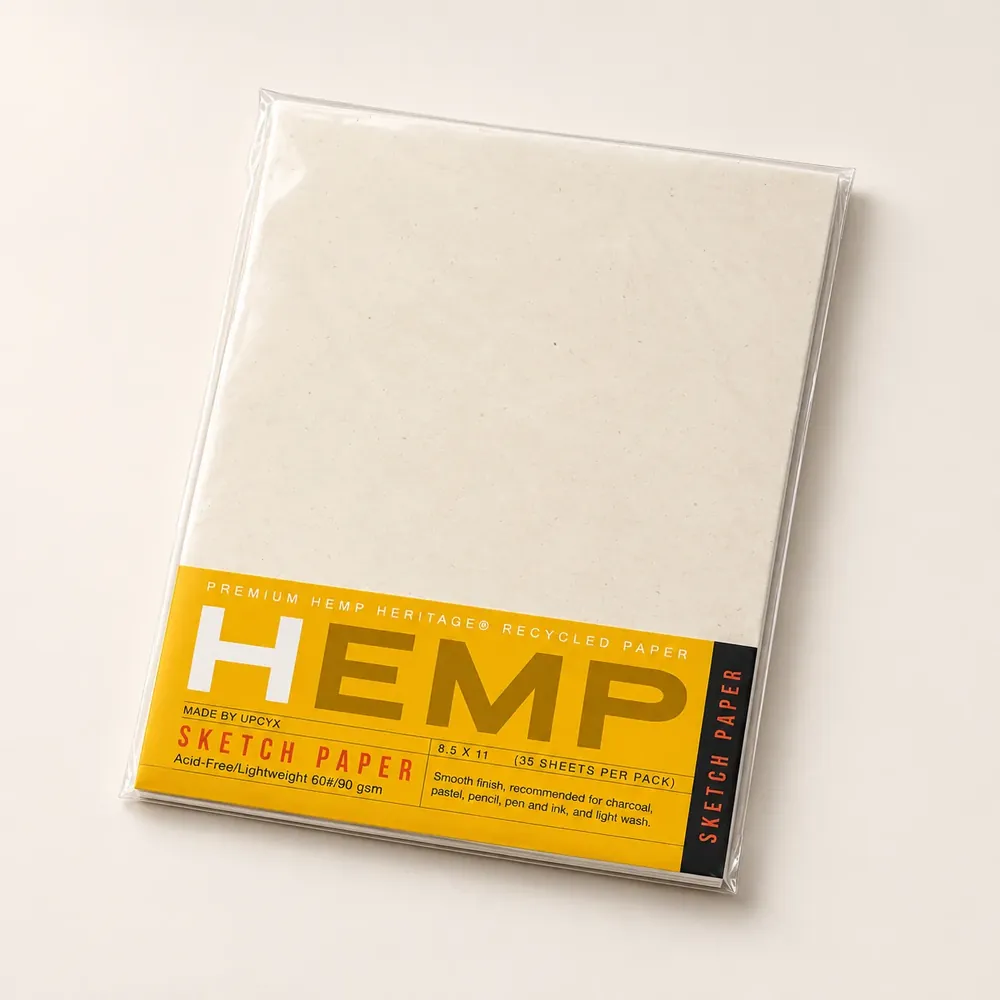
A paper's finish is the texture of its surface. Vellum is soft with a slight tooth. Laid has fine parallel lines running through it. Smooth is flat and even. The finish decides how a pencil grips, how ink sits and how a printed page looks, so it is worth knowing the handful of terms you will meet.
Coated or uncoated comes first
Every finish belongs to one of two families.
Coated paper has a thin mineral layer on the surface. Ink sits on top of it, which is why magazine photos look sharp and glossy. Gloss, silk and matte are all coatings.
Uncoated paper has nothing on top. Ink and pencil go into the fibres themselves. It feels like paper, it takes a pen or a pencil well, and it does not glare under a lamp. Everything Hemp Heritage makes is uncoated.
The finishes you will meet
| Finish | What it looks and feels like | Good for |
|---|---|---|
| Smooth | Flat and even, with no pattern | Fine detail, small type, labels |
| Vellum | Soft, with a slight, even tooth | Letterhead, books, writing, pencil |
| Antique | A rougher, more natural version of vellum | Books, stationery, a handmade look |
| Laid | Fine parallel lines you can see against the light | Charcoal, pastel, formal stationery |
| Rough | A strongly textured surface | Watercolour |
Vellum, and the confusion around it
Vellum causes more mix-ups than any other paper word, because it means three things.
- Originally, vellum was a writing surface made from calfskin.
- In craft shops, "vellum" often means a translucent tracing-style sheet.
- In papermaking, a vellum finish is an uncoated surface with a fine, eggshell-like tooth.
When a paper spec says "vellum finish", it means the third one. It has nothing to do with calfskin or tracing paper.
Where laid lines come from
Hold a laid sheet up to a window and you will see close-set parallel lines, crossed by a few lines spaced further apart. They are a leftover from how paper was made by hand: the sheet was formed on a screen of fine wires, and the wires left their pattern in the wet pulp. Today the pattern is pressed into the sheet on purpose, because artists and printers still like what it does.
Charcoal and pastel catch on the ridges, which gives a drawing its texture. On stationery, a laid sheet reads as traditional and formal.
Watercolour has its own words
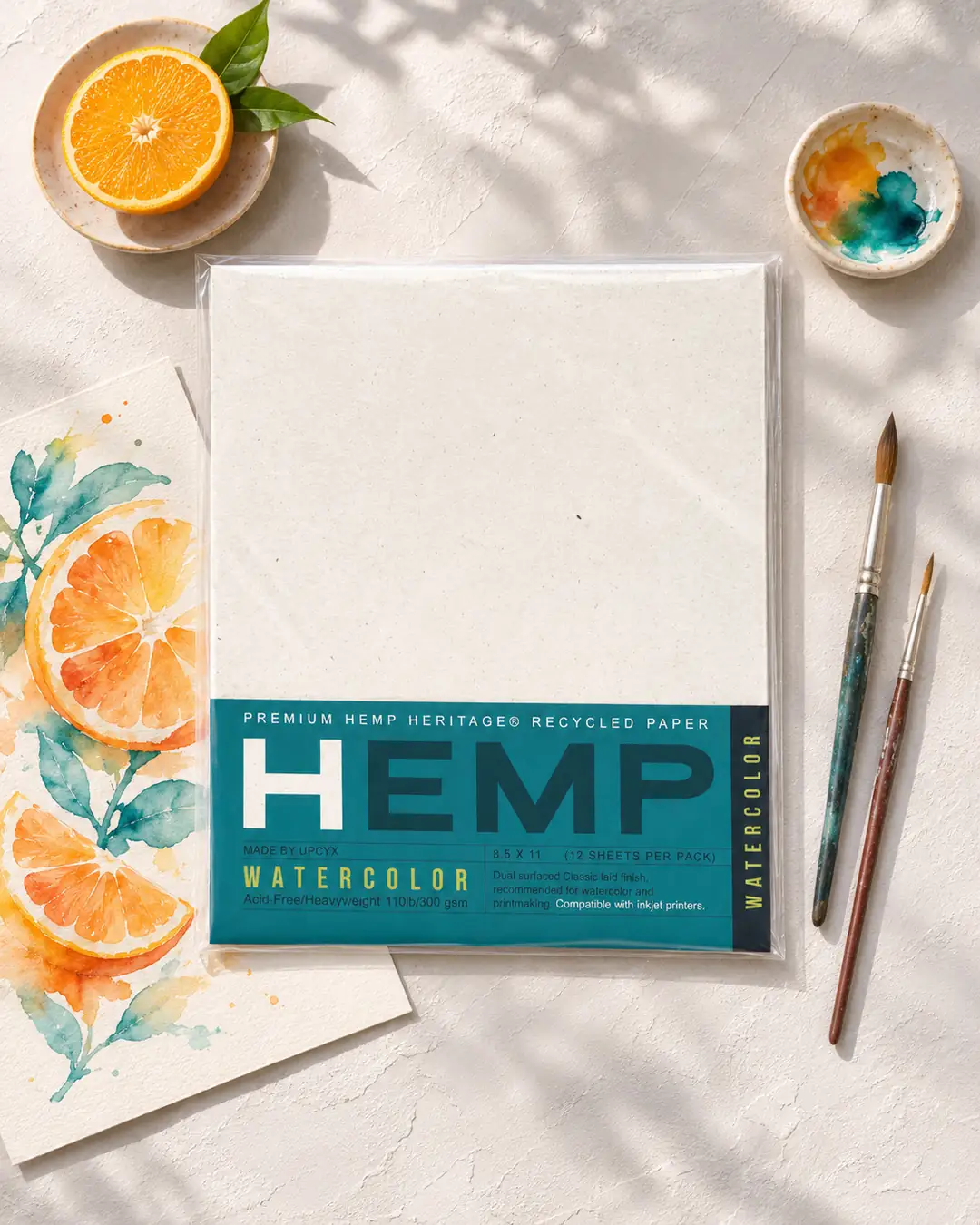
Watercolour paper is usually described as hot press, cold press or rough. Hot press is the smoothest, cold press sits in the middle, and rough has the most texture. On a rough sheet, paint settles into the hollows and a dry brush skips across the high points, leaving small flecks of paper showing. That is where a watercolour gets its sparkle.
Which finishes Hemp Heritage paper has
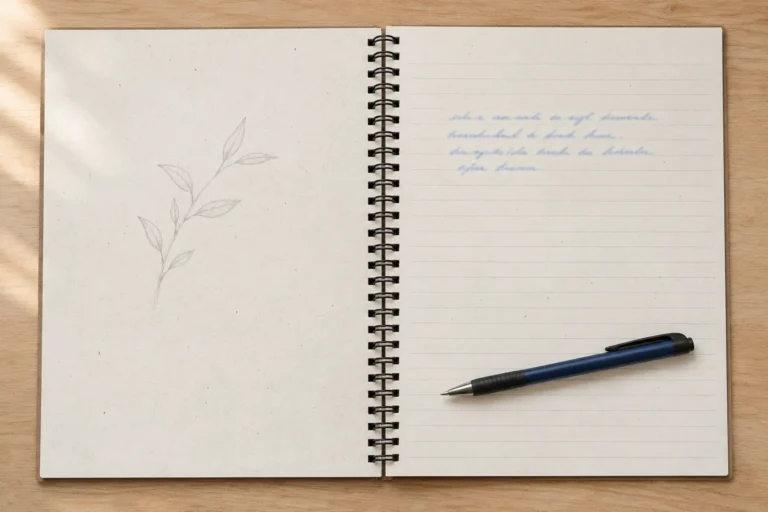
- Vellum antique on our text and cover weights. This is the paper in the reams and the journals. It is soft and slightly toothy.
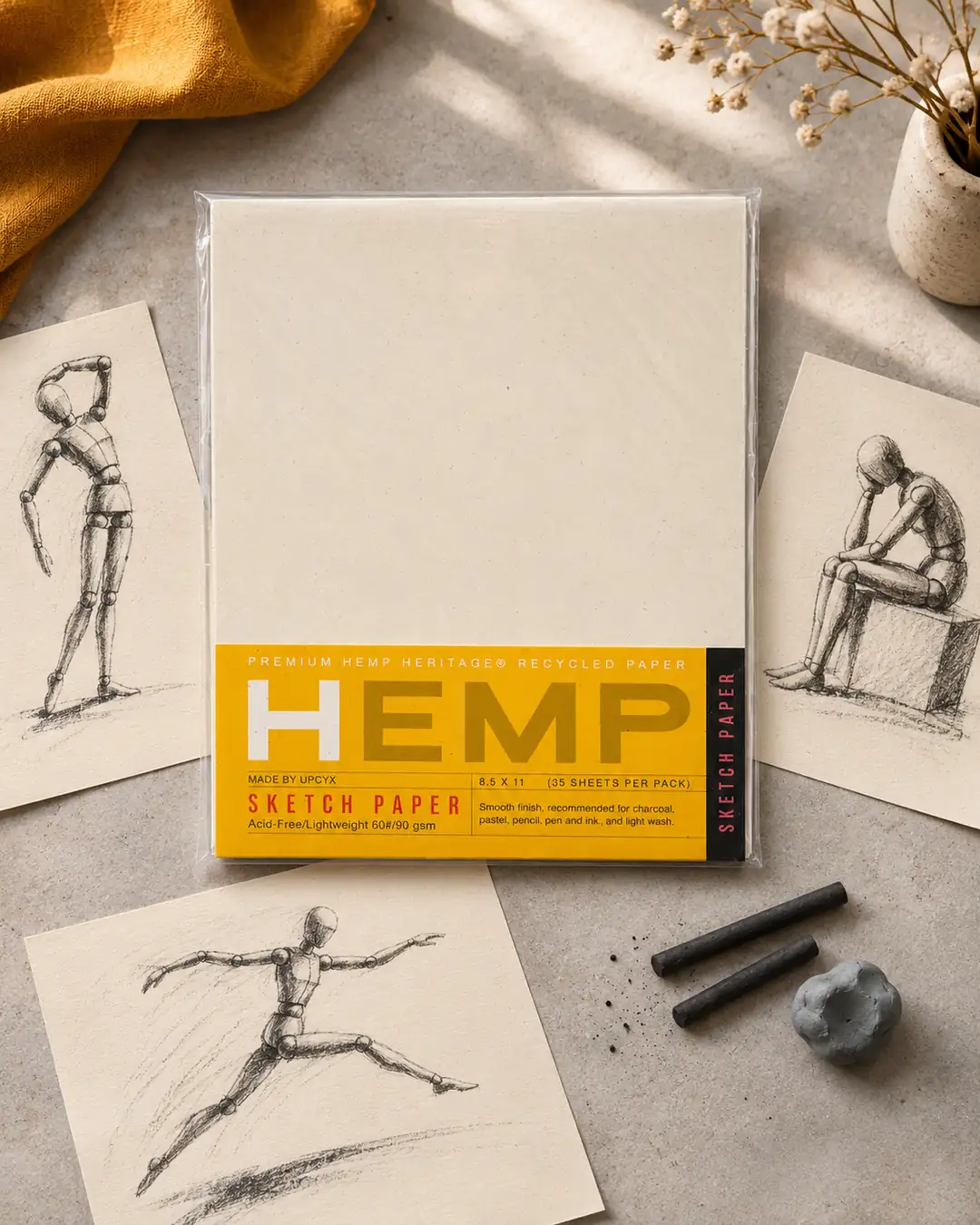
- Laid on our sketch and drawing art papers.
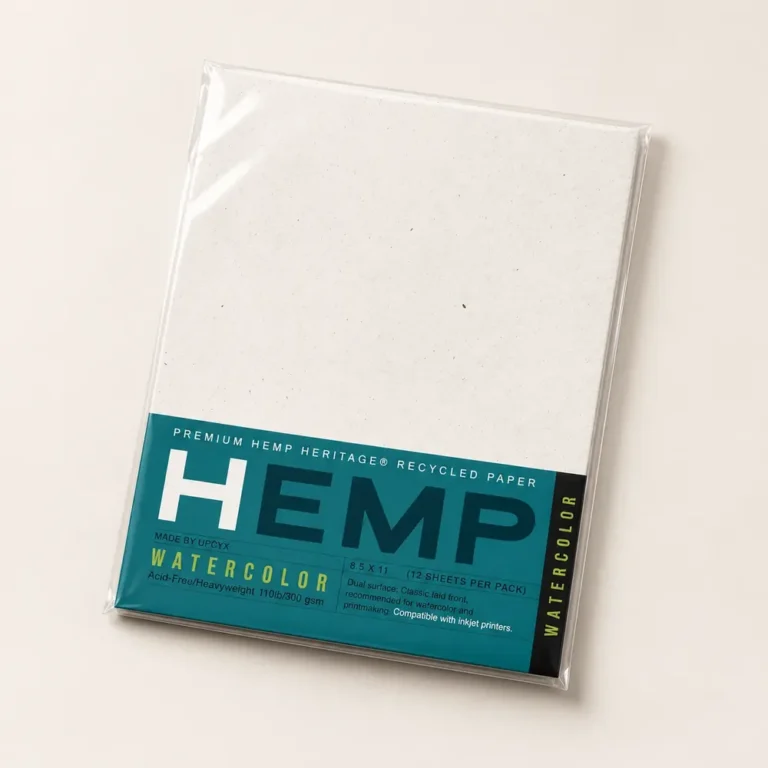
- Rough on both sides on the Watercolor Paper Art Pack, so each sheet has two working surfaces.
- Smooth on the adhesive labels, and on one side of the blank business cards. The other side of the cards is laid.
Sketch Paper Art Pack
- Paper: 35 loose sheets, sketch weight (90 gsm), European laid finish
- Sizes: 8.5" x 11" and 11" x 14"
- Printer: Inkjet compatible
Good for: charcoal, pastel, pencil, and light wash, when you want loose sheets instead of a book.
How finish changes what you see
In print. A toothy, uncoated sheet prints softer than a smooth one. Text looks crisp and warm. Photographs lose a little sharpness. Large blocks of solid colour will show some of the paper's texture through them.
In writing and drawing. More tooth means more grip and a darker pencil line. Less tooth means a pen glides more easily.
In the hand. This is the part no screen can show you. People notice a textured sheet the moment they pick it up.
How to choose
- Start with what will go on the paper. Dry media want tooth. Fine print wants a smoother sheet.
- Then think about who will hold it. A wedding invitation and a shipping label are doing different jobs.
- Then feel it. Order a small quantity before a large one.
For the other half of the decision, read which paper weight do I need. For how each finish behaves under pencil and ink, see Is hemp paper good for sketching and drawing?
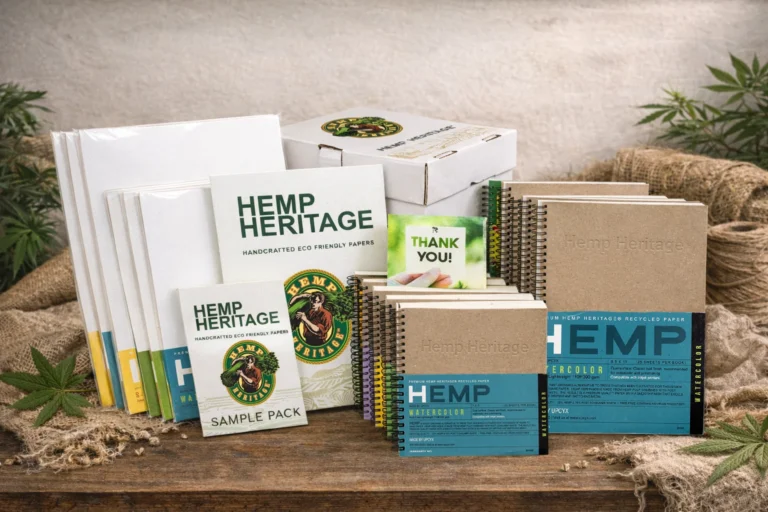
To handle every finish we make at once, the Sample Box has one of each book and art paper.
Made on hemp paper
Journals, stationery, and fine art paper made from 25% hemp and 75% post-consumer recycled fiber.