Four kinds of notebook are sold as alternatives to ordinary tree paper: hemp, bamboo, sugarcane and stone paper. They are less alike than the labels suggest. Three are made of plant fibre and one is not paper at all. Here is what each really is, so you can choose with your eyes open.
At a glance
| Hemp | Bamboo | Sugarcane | Stone paper | |
|---|---|---|---|---|
| What the pages are | Hemp fibre blended with other pulp | Bamboo pulp, or often recycled paper inside a bamboo cover | Pulp from crushed sugarcane stalks | Ground stone bound with plastic |
| Is it fibre paper? | Yes | Yes | Yes | No |
| Feel | Soft, with a slight tooth | Like ordinary paper | Like ordinary paper | Very smooth, almost silky |
| Water | Behaves like paper | Behaves like paper | Behaves like paper | Waterproof |
| After use | Paper recycling | Paper recycling | Paper recycling or compost | Not accepted in most paper recycling |
Hemp notebooks
The pages are made with fibre from the hemp stalk, almost always blended with another pulp. Ask how much is hemp and what the rest is.
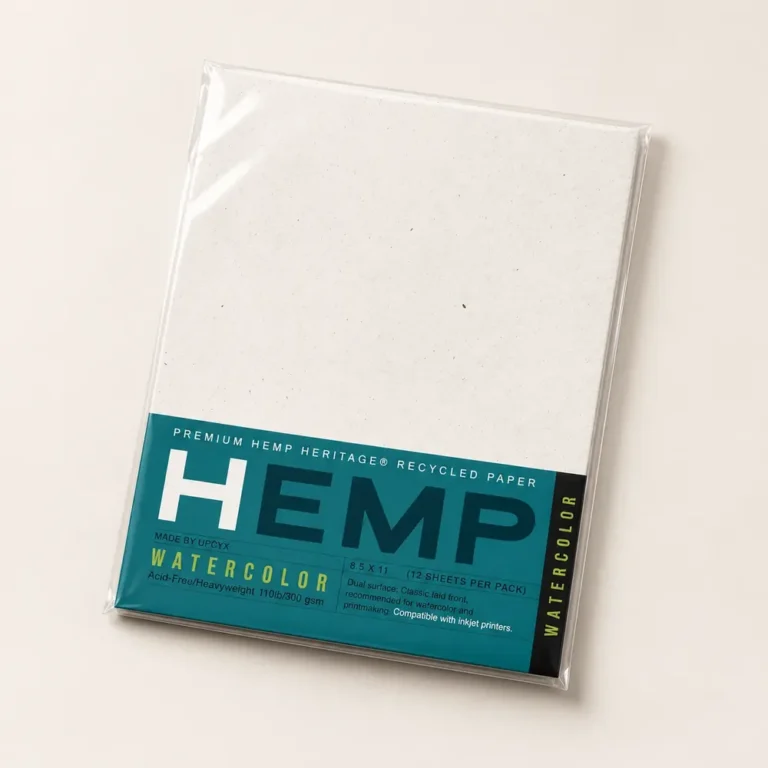
In ours, the answer is 25% hemp and 75% post-consumer recycled fibre. That means no virgin wood pulp, though the recycled part was tree paper in its first life. The page is off-white, flecked and acid-free, and it goes in the paper recycling when you are done.
Watch for: a "hemp notebook" where the hemp is only in the cover.
Bamboo notebooks
Bamboo is a fast-growing grass, and it can be pulped into paper much as wood is. But many notebooks sold as bamboo have a bamboo cover and ordinary recycled pages inside.
Watch for: which part is bamboo. Read the page description, not the product name.
Sugarcane notebooks
After sugarcane is crushed for its juice, the leftover stalk fibre is called bagasse. It can be pulped into paper. It uses a by-product of a crop that was grown anyway, and the pages write like ordinary paper.
Watch for: the percentage. Many are a blend of bagasse and wood pulp.
Stone paper notebooks
Stone paper is not paper in the usual sense. It is roughly 80% ground calcium carbonate, the mineral in limestone, held together with about 20% plastic. No plant fibre is involved.
The pages are smooth and waterproof and they do not tear easily. The trade-off comes afterwards. Stone paper does not belong in ordinary paper recycling, and it will not break down in a home compost.
Watch for: what your local recycling accepts before you buy.
How to choose
- Check what the pages are made of, not only the cover or the product name.
- Ask for the percentages. How much is the headline fibre, and what is the rest?
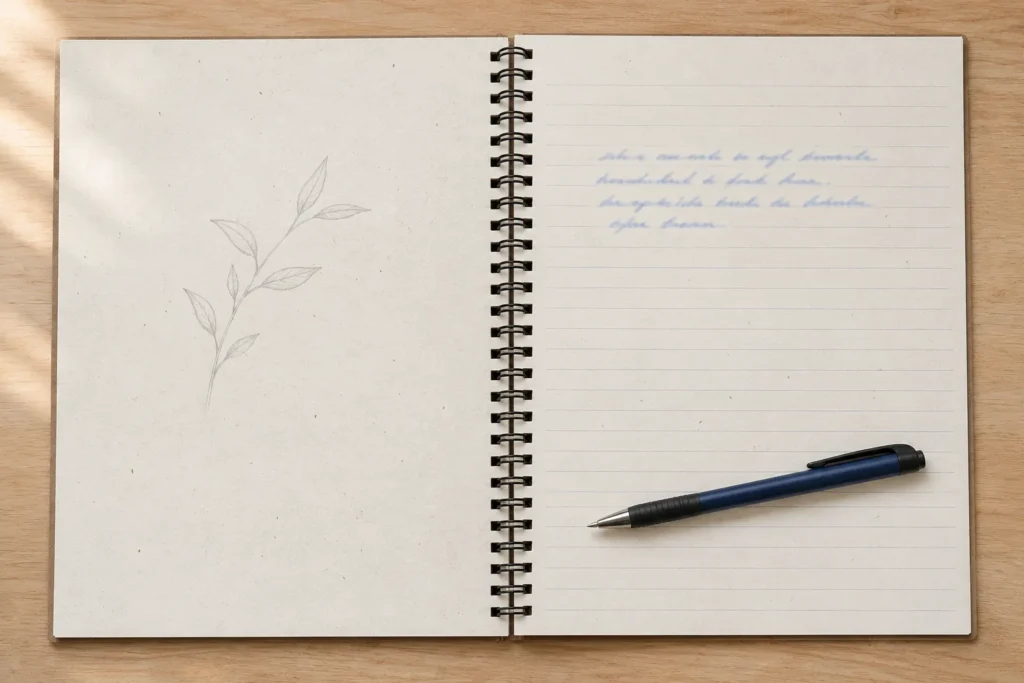
- If you write in pencil or sketch as you go, pick a page with tooth. Hemp has it.
- If you keep your notebooks for years, pick an acid-free page. Ours is.
- If you care what happens afterwards, pick fibre paper, which goes back into the paper stream.
The hemp notebooks we make
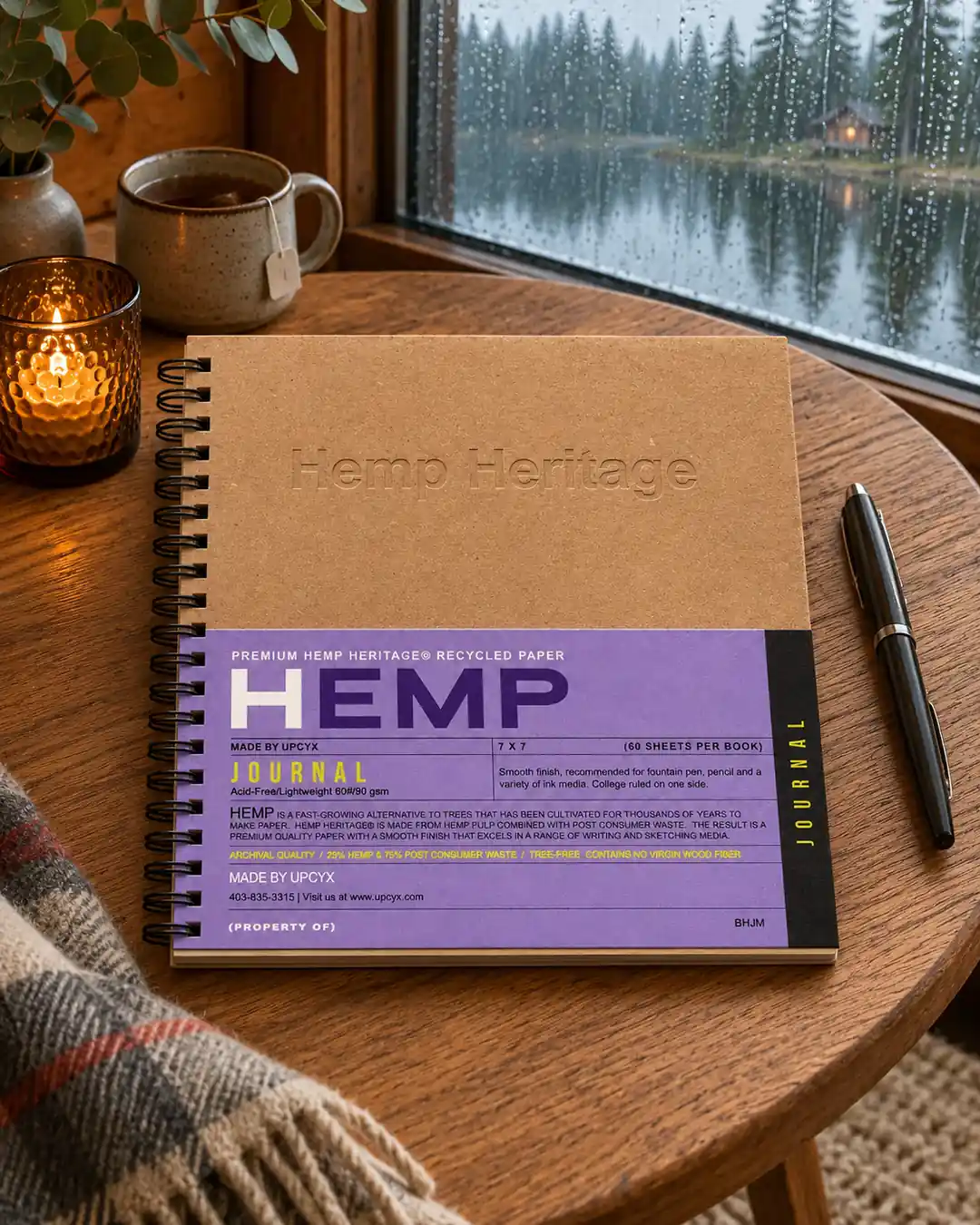
Journal Book
- Paper: 60 sheets of 60# text (90 gsm)
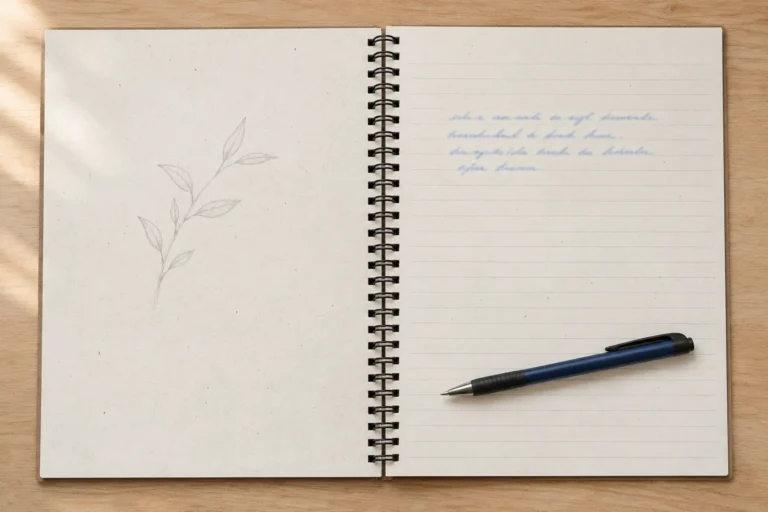
- Ruling: College ruled on the front of each page, blank on the back
- Sizes: Medium 7" x 7" and Large 8.5" x 11"
- Build: Extra-heavy debossed chipboard cover, black wire binding
Good for: writing on one side and sketching or doodling on the other. It also takes pastels, charcoal, pencil, and light washes.
The Journal Book is ruled on the front of each sheet and blank on the back. For blank pages only, see the Sketch Book.
Keep reading
Made on hemp paper
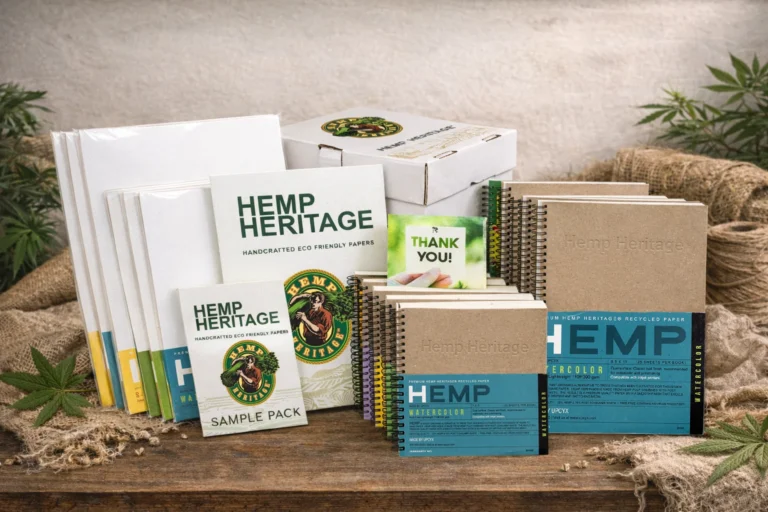
Journals, stationery, and fine art paper made from 25% hemp and 75% post-consumer recycled fiber.