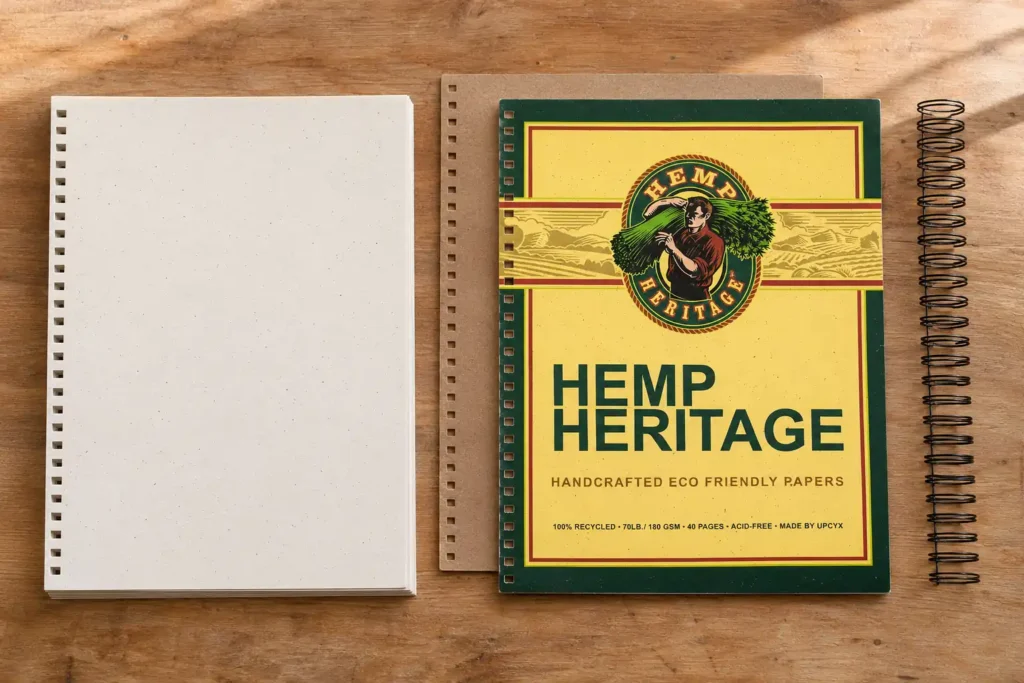
Yes to both. Hemp paper goes in the same recycling bin as any other paper, and plain uncoated sheets will break down in a home compost heap. If you have the choice, recycle it. The fibre in the sheet is strong enough to be made into paper several more times, and that is a better use of it than turning it into soil.
Recycling hemp paper
There is nothing special to do. Put it in with your ordinary paper and cardboard.
Hemp fibres are long. By our spec sheet, hemp paper can be recycled about seven times before the fibres wear out, against about three for tree paper. When a hemp sheet goes back into the stream, those long fibres go with it and help hold the next batch of recycled paper together.
Our paper is already 75% post-consumer recycled fibre, so most of the sheet has been through this once before.
Composting hemp paper
Hemp Heritage paper is bio-based, with no plastic coating, no bleach and no dye. A plain sheet is plant fibre, and plant fibre composts.
A few things make it work better:
- Tear or shred it. Small pieces break down far faster than whole sheets.
- Treat it as a "brown". Paper is a dry, carbon-rich material, like dead leaves. Balance it with "greens" such as vegetable scraps and grass clippings.
- Keep it damp. Dry paper sits in a heap for months.
- Be patient with the heavy sheets. The 300 gsm cover weight takes longer than a thin journal page.
What to do with each part
| Item | Recycle | Compost |
|---|---|---|
| Plain or written-on sheets | Yes | Yes |
| Pencil, pen and inkjet-printed pages | Yes | Usually. If in doubt, recycle |
| Laser-printed pages | Yes | No. Toner is a plastic powder |
| Painted pages with heavy acrylic | Check locally | No |
| Chipboard notebook covers | Yes, with cardboard | Yes, torn up small |
| Wire binding | Scrap metal, where accepted | No |
| Adhesive labels and their backing sheet | Check locally | No |
Recycling rules are set town by town. If something on this list is not accepted where you live, your local program has the final say.
How to take a notebook apart
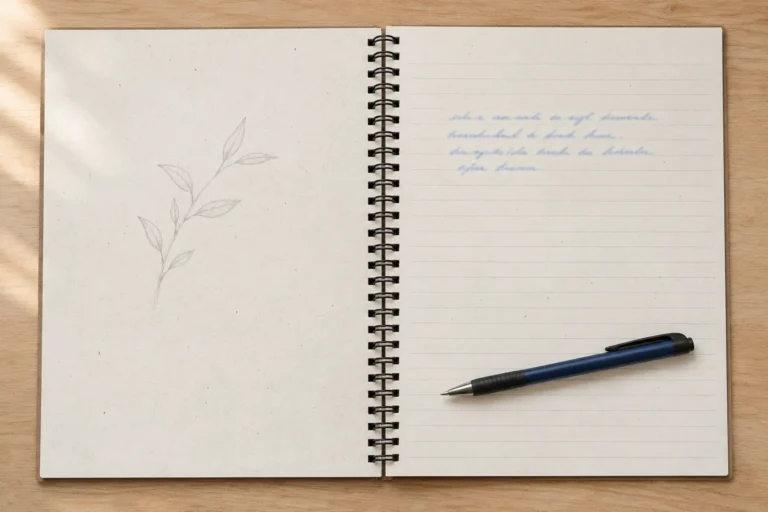
A finished journal or sketchbook is three materials: paper, chipboard and wire.
- Open the book flat and unwind the wire from one end, or snip it and pull it free.
- Put the pages and the chipboard covers in the paper recycling.
- Set the wire aside for scrap metal.
It takes about a minute. Or keep the book. A full sketchbook is worth more on a shelf than in a bin.
Which is better, recycling or composting?
Recycling, when it is available. A composted sheet becomes soil once. A recycled sheet becomes paper again, and then again.
Composting is the right choice for the paper recycling cannot take: sheets that are food-stained, damp or too small to sort.
What "compostable" means here
When we say the paper is biodegradable and compostable, we mean the sheet is made only from plant fibre, with no plastic coating, bleach or dye. We are describing what is in it. The paper has not been certified to a composting standard, and we do not claim that it has.
More on the fibre
- Hemp paper or recycled paper: which is the better choice?
- What is post-consumer recycled fibre?
- The figures behind the paper are on the sustainability page.
Made on hemp paper
Journals, stationery, and fine art paper made from 25% hemp and 75% post-consumer recycled fiber.