Hemp is one of the oldest papermaking fibres there is. The earliest paper found in China, made about two thousand years ago, contains hemp. For most of the time since, paper was made from plant fibres and old cloth, and hemp was part of the mix. Wood pulp only took over in the 1800s.
Two famous claims about hemp paper get checked along the way.
China, about two thousand years ago
Paper was invented in China. The oldest fragments that survive were made from hemp fibre, and they are older than the usual textbook date for the invention.
That date is the year 105, when a court official named Cai Lun is credited with a method for making paper from tree bark, hemp, old rags and worn-out fishing nets. Whether he invented it or improved it, the recipe is telling. From the very start, paper was made from plant fibre and from things people had finished using.
The age of rags
Papermaking travelled west along the trade routes. By the 700s it was being made in Samarkand, and by the 1200s there were paper mills in Spain and Italy.
For the next six hundred years, European paper was made from rags. Worn-out clothing, old rope and retired sailcloth were collected, sorted and beaten into pulp. Most of that cloth was linen, and a good share of the rope and canvas was hemp. So some of the paper from those centuries has hemp in it.
Two famous claims, checked
You will often read that the Gutenberg Bible and the American Declaration of Independence were printed on hemp paper. Neither claim holds up as stated.
The Gutenberg Bible. About three quarters of the copies were printed in the 1450s on rag paper brought from Italy, and the rest on vellum, which is calfskin. The libraries that hold copies describe that paper as linen. There is no evidence that it was hemp.
The Declaration of Independence. The signed copy on display in Washington is written on parchment, which is animal skin. It is not paper at all. The drafts were written on ordinary paper of the day, which was rag paper and may have included hemp, but nobody has shown that it did.
What can be said is that for centuries hemp was one of the fibres the world's paper was made from.
The 1800s: wood takes over
By the 1800s the world wanted far more paper than there were rags to make it from. In the 1840s two men worked out, separately, how to make paper from ground wood: Friedrich Gottlob Keller in Germany and Charles Fenerty in Nova Scotia. Chemical methods of pulping wood followed.
Wood was cheap and there seemed to be no end of it. By 1900 most of the world's paper was made from trees, and rag paper had become a specialty.
The 1900s: hemp disappears from the field
Hemp was still being studied as a paper fibre. In 1916 the United States Department of Agriculture published a study on making paper from hemp and reported that it produced a good sheet.
What ended it was the law. Rules aimed at marijuana caught industrial hemp as well. Growing hemp became impractical in the United States after 1937, and Canada banned it in 1938. For decades almost no hemp was grown in North America.
The return
Canada made it legal to grow industrial hemp again, under licence, in 1998. The United States followed with the 2018 Farm Bill.
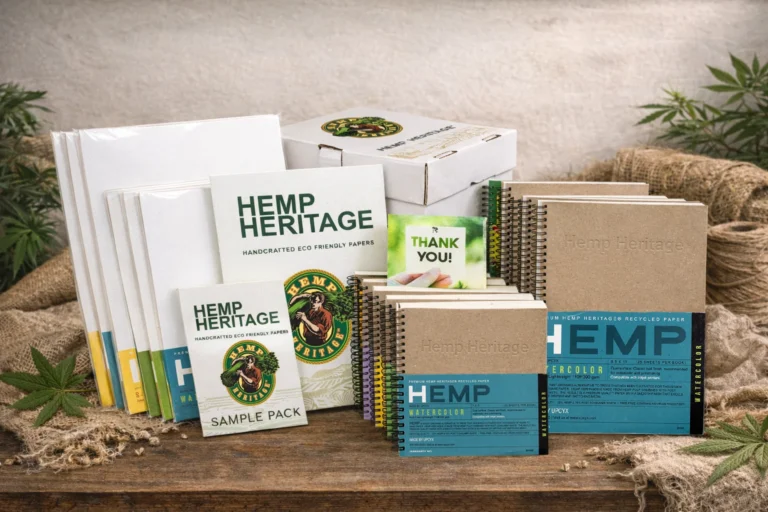
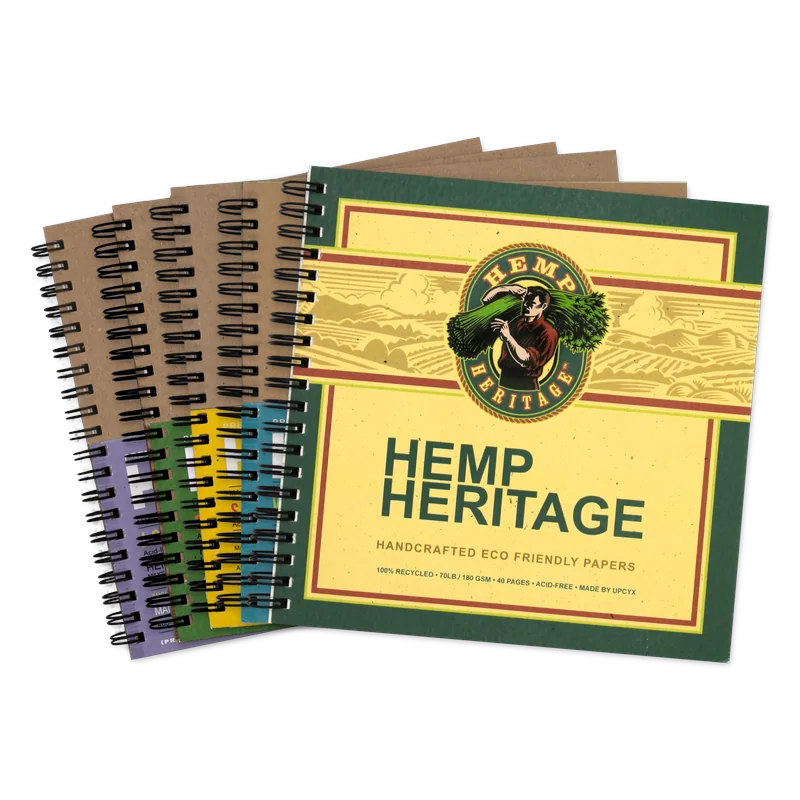
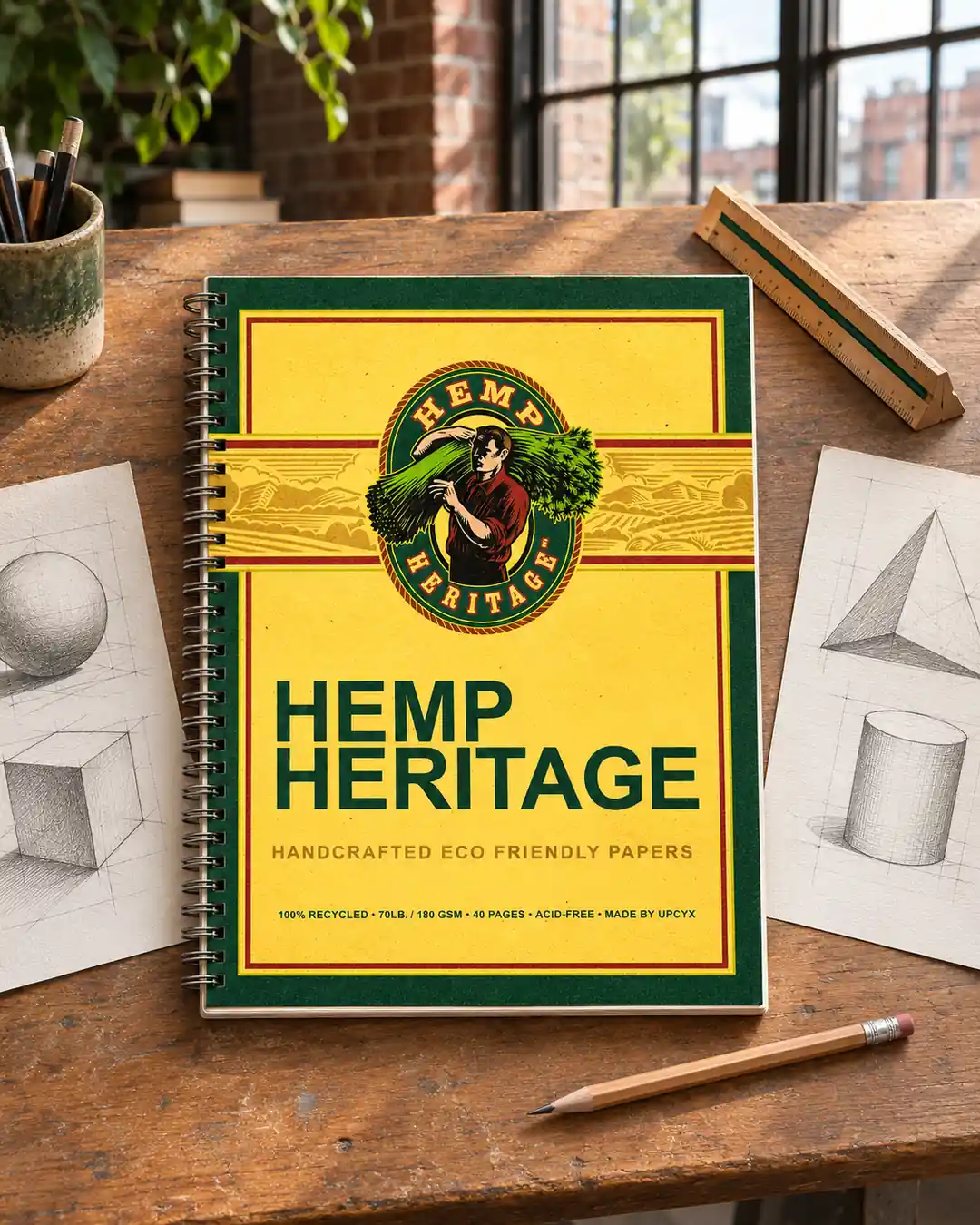
Hemp Heritage is part of that return. The line was created in a studio that grew into one of the largest handmade paper companies in North America, and it has been made on this continent for decades. Upcyx bought the line and runs it today from Calgary, Alberta.
What has not changed
Look back at Cai Lun's recipe: plant fibre, plus material that had already been used once. For most of history, that is what paper was.
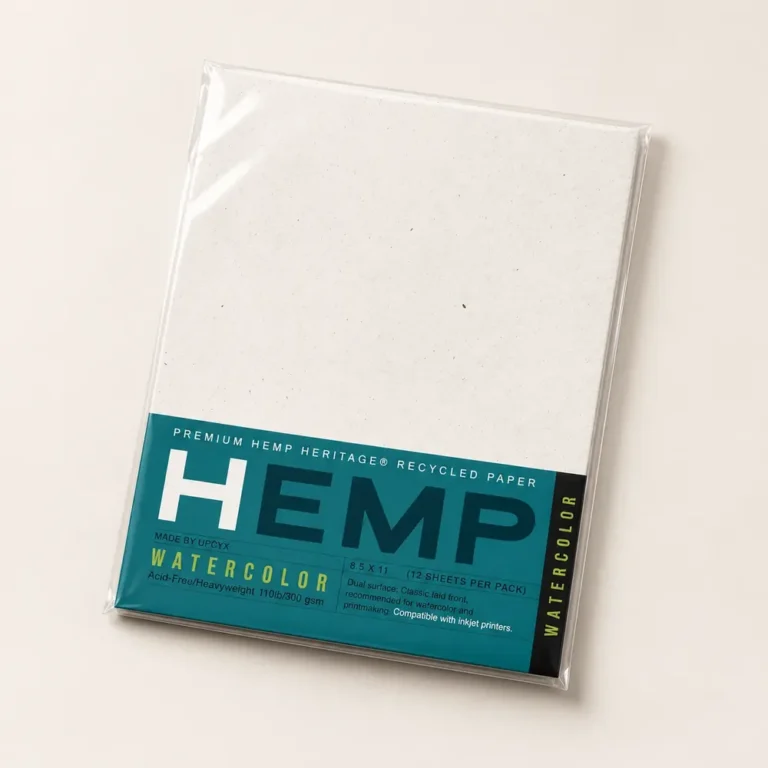
Hemp Heritage paper is 25% hemp and 75% post-consumer recycled fibre: hemp, plus paper that has already been used once.
Keep reading
Made on hemp paper
Journals, stationery, and fine art paper made from 25% hemp and 75% post-consumer recycled fiber.