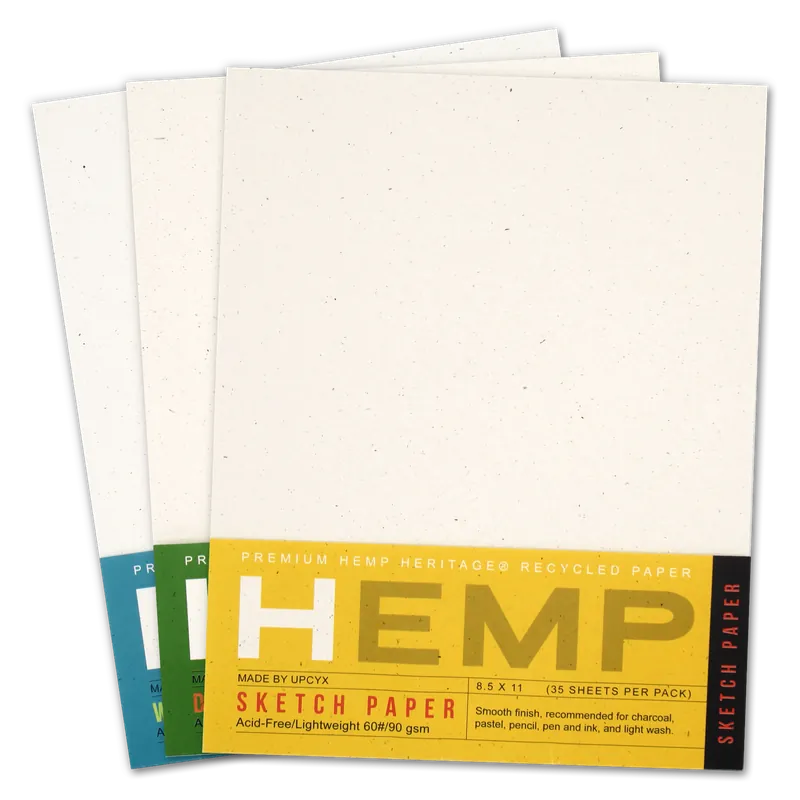
Post-consumer recycled fibre is paper that someone has already used, put in a recycling bin, and that has been pulped again to make new paper. The percentage on a label tells you how much of the sheet came from that bin. The number matters because the word "recycled" on its own can describe a sheet that is almost entirely new pulp.
Post-consumer and pre-consumer are not the same thing
Recycled fibre comes from two places.
Post-consumer fibre has lived a full life. It was an office printout, a magazine, a cereal box or a school worksheet. Somebody used it and recycled it. Without recycling, it would have gone to the landfill.
Pre-consumer fibre never reached a customer. It is the trimmings from a paper mill, the offcuts from a print shop and the stock that did not sell. Reusing it is sensible, and mills have always done it, because throwing it away would be throwing away money.
Both can be counted as "recycled content" on a label. Only one of them is waste that was kept out of the landfill. That is why the post-consumer number is the one to look for. You will often see it written as PCW, for post-consumer waste.
Why the percentage matters
Compare two packages of paper.
- One says "made with recycled content".
- The other says "75% post-consumer recycled fibre".
The first could contain 10% mill offcuts and 90% fresh wood pulp. The second tells you exactly what three quarters of the sheet is made from. A specific number can be checked, and a vague phrase cannot.
How to read a label
- Find the number. Look for a percentage next to the word "post-consumer" or the letters PCW.
- Ask about the rest. A sheet that is 30% post-consumer is 70% something else. Usually that is virgin wood pulp.
- Do not confuse recycled with recyclable. "Recyclable" means the paper can go in the bin when you are done. It says nothing about what the paper was made from.
What it changes about the paper
Colour. Recycled pulp is rarely pure white on its own. To make a bright white recycled sheet, the pulp has to be cleaned and bleached. A recycled sheet that has not been bleached is off-white or grey.
Strength. Paper fibres get shorter every time they are recycled. A sheet made only from fibre that has been around several times is weaker than one made from fresh pulp. This is why recycled fibre is usually blended with something longer and stronger.
How Hemp Heritage paper is put together
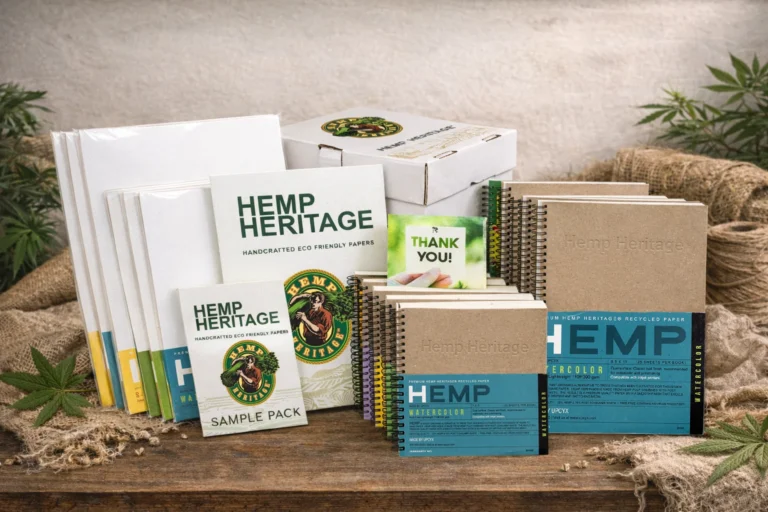
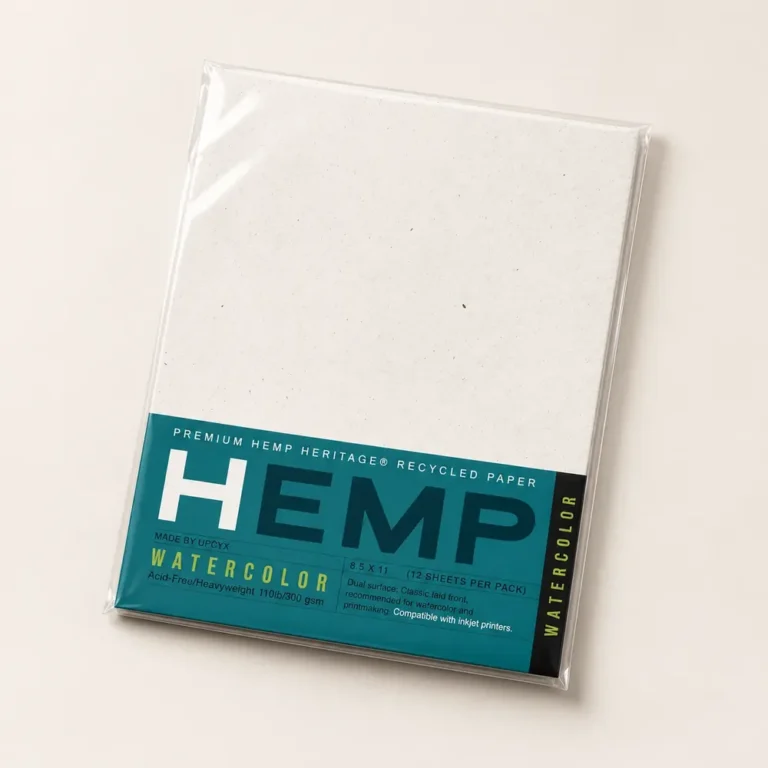
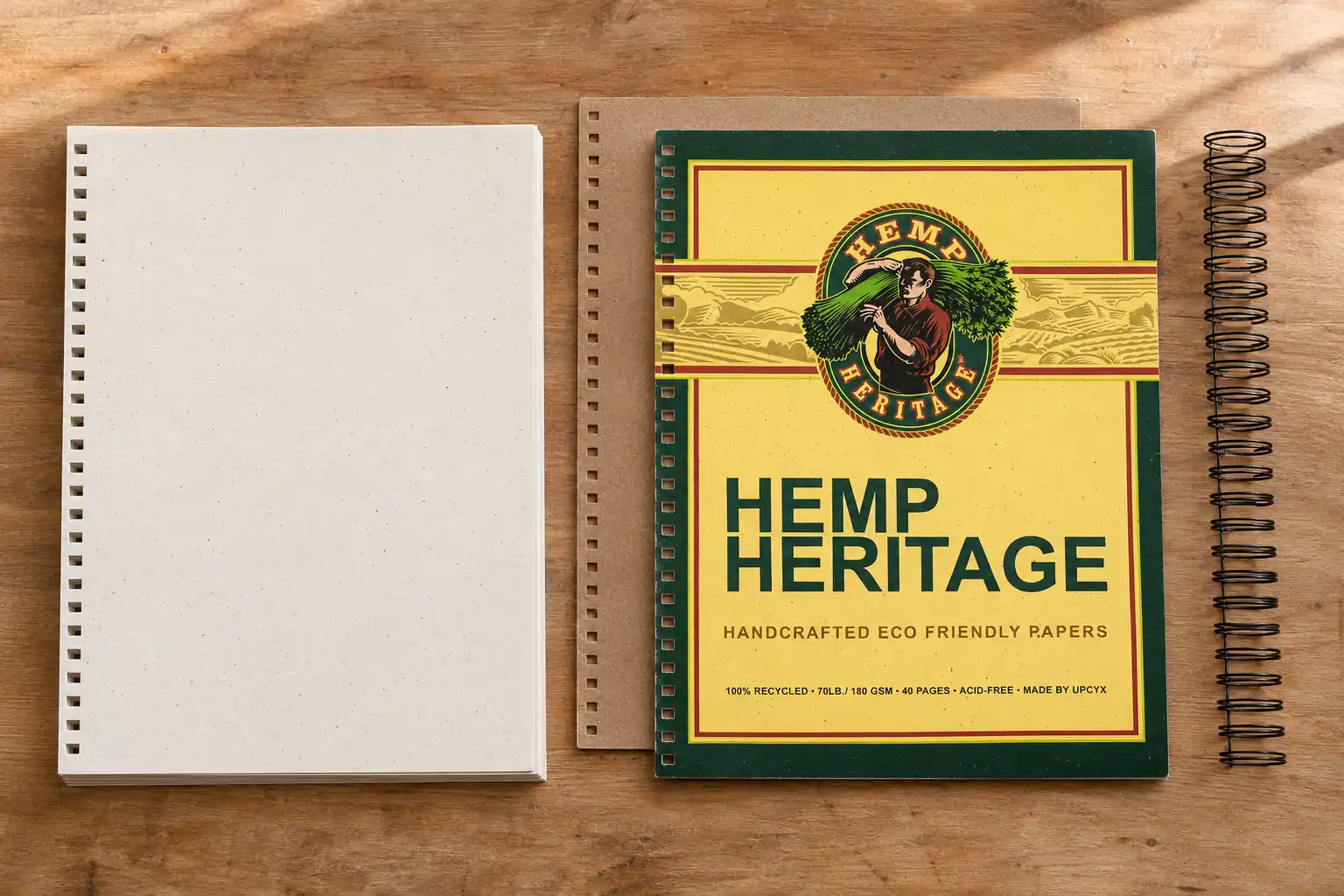
Our sheet is 75% post-consumer recycled fibre and 25% hemp.
- The 75% is paper that has already been used once.
- The 25% is hemp, which supplies the long, strong fibre the recycled part needs.
- There is no virgin wood pulp in it.
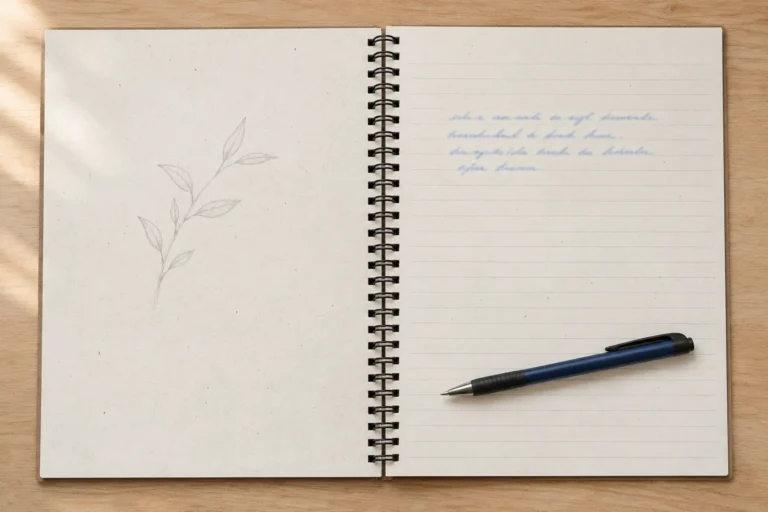
- Nothing is bleached or dyed, which is why the paper is a natural off-white.
Blending recycled fibre with hemp, instead of with fresh wood pulp, is the idea behind the sheet. We go into that in Hemp paper or recycled paper: which is the better choice?
Three questions worth asking any paper brand
- What percentage is post-consumer?
- What is the rest made from?
- Was the pulp bleached, and with what?
A brand that knows its paper will answer all three without hesitating. Ours are on the sustainability page and in the FAQ.
If you would like to see what a 75% post-consumer sheet looks like in your own printer, the Mini Ream is 250 sheets.
For the rest of the case, read why choose Hemp Heritage paper.
Made on hemp paper
Journals, stationery, and fine art paper made from 25% hemp and 75% post-consumer recycled fiber.