You do not have to pick one. The two solve different halves of the same problem. Recycled paper keeps used paper out of the landfill. Hemp supplies the strong new fibre that recycled paper needs to keep going. The more useful question about any sheet is where its new fibre comes from.
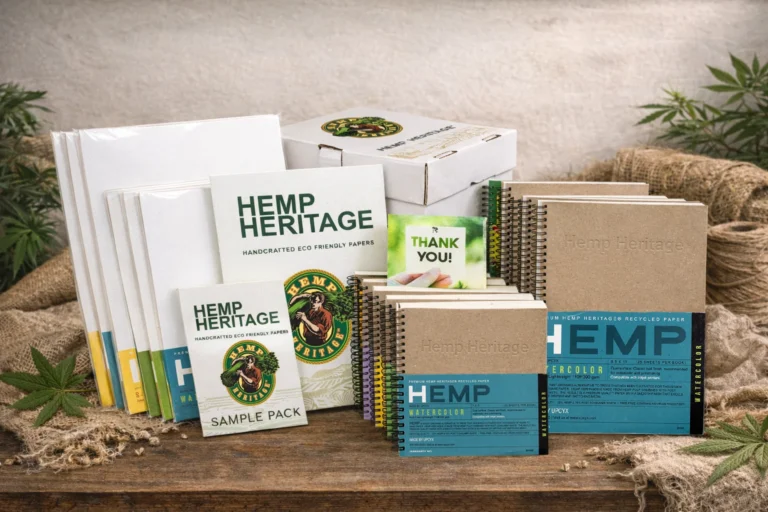
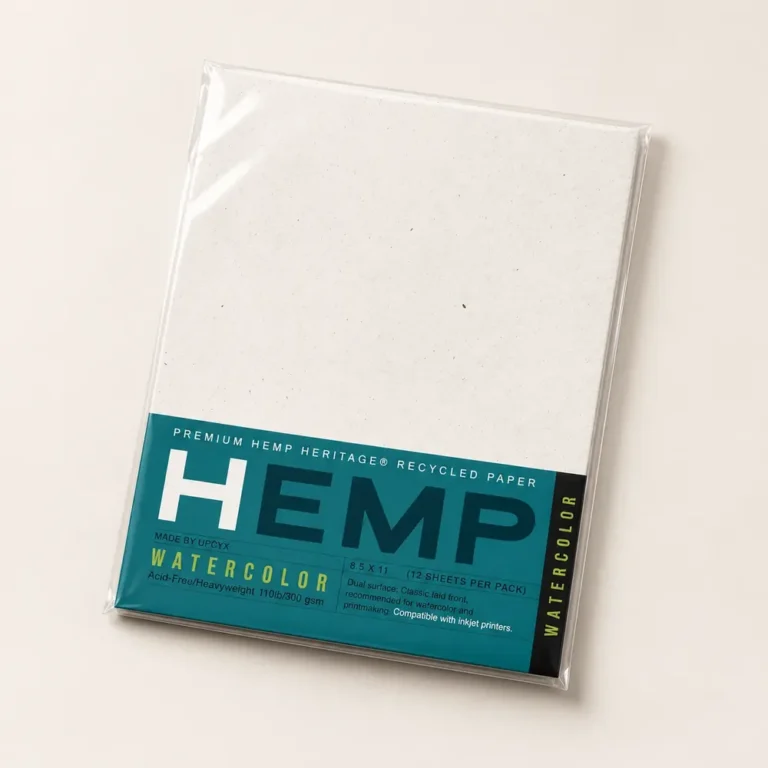
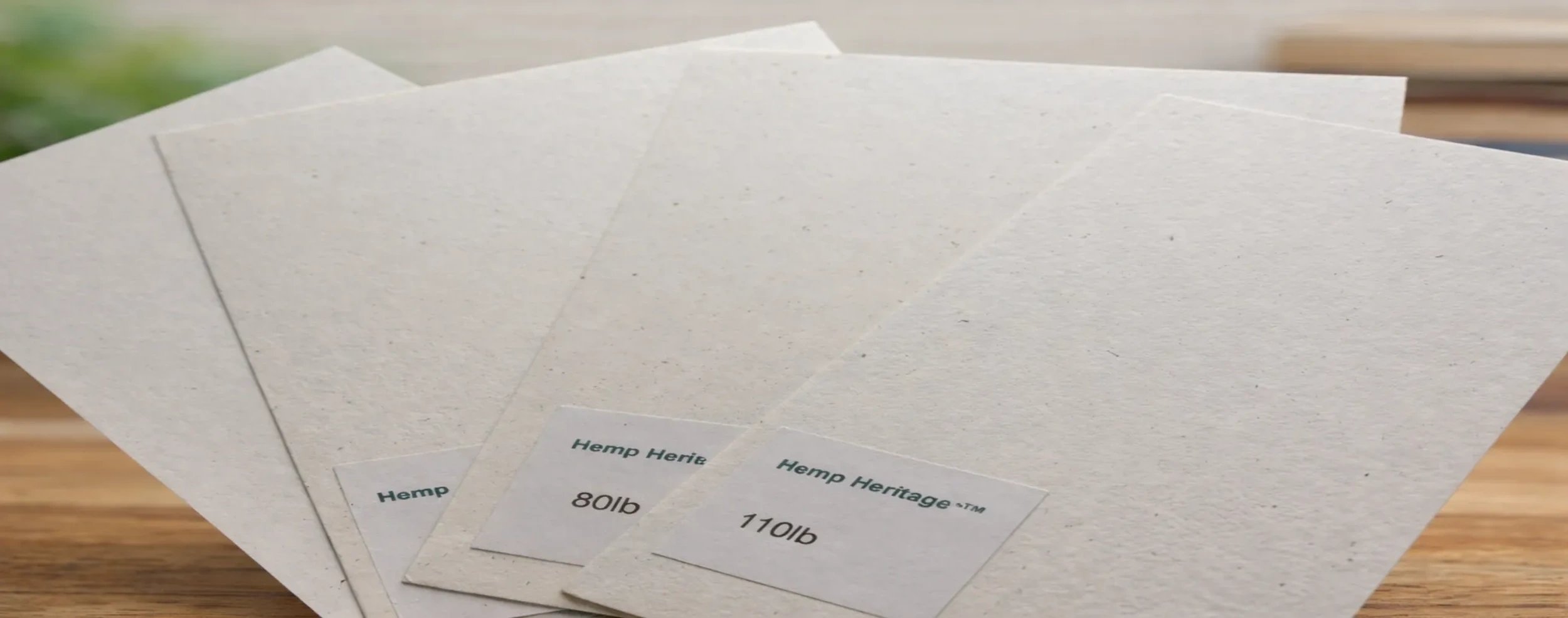
Hemp Heritage paper is both: 25% hemp and 75% post-consumer recycled fibre.
What recycled paper does well
Recycled paper is made from paper that already exists. Used sheets are collected, pulped, cleaned and turned into new ones. No new crop has to be grown for that share of the sheet, and the old paper stays out of the landfill. For a product people use and throw away as fast as paper, that is a real gain.
The limit of recycling
A paper fibre cannot be recycled forever. Each trip through the process breaks the fibres and makes them shorter. Shorter fibres make a weaker sheet, and after a few rounds they are too short to hold together at all. Our spec sheet puts tree paper at about three trips and hemp paper at about seven.
That means the recycling stream is always losing fibre off the short end. To keep making usable paper, mills have to keep adding new, long fibre at the other end.
So every recycled paper raises a second question: where did the new fibre come from?
Where the new fibre comes from
Usually it is fresh wood pulp. That is what most paper mills are built around.
Hemp is another answer. Its fibres are long and strong. By our spec sheet figures, the crop is ready to harvest about four months after planting, and an acre of hemp yields about four times as much paper as an acre of trees.
In our sheet, hemp is the new fibre. There is no virgin wood pulp in it.
How they compare
| Typical recycled paper | Hemp Heritage | |
|---|---|---|
| Recycled content | Varies. Check the post-consumer percentage | 75% post-consumer |
| New fibre | Usually wood pulp | 25% hemp |
| Virgin wood pulp | Often some | None |
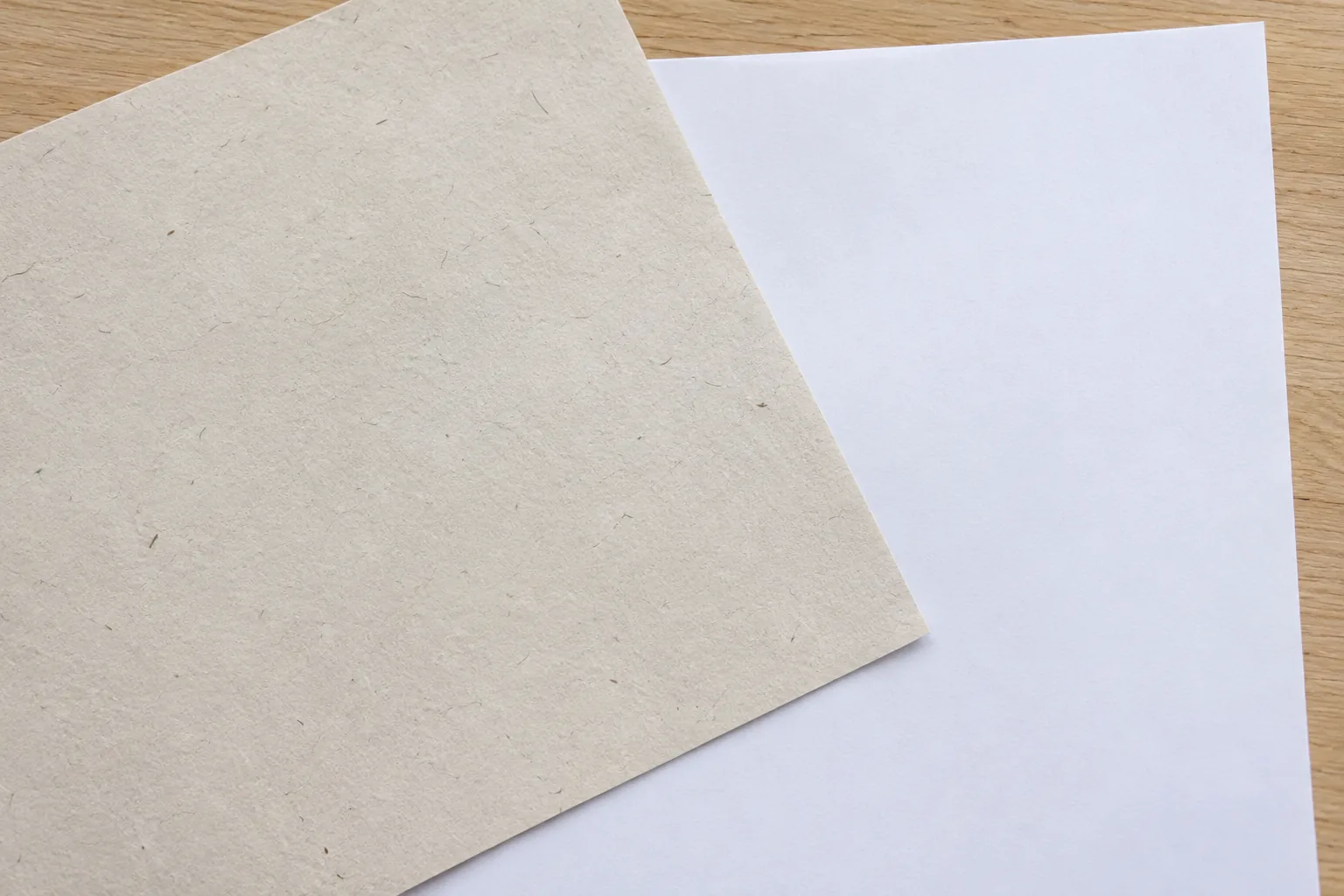
| Colour | Often bleached white | Unbleached off-white with hemp flecks |
| Price | Low to moderate | Higher. It is a specialty paper |
| Best for | High-volume everyday printing | Paper people will hold and keep |
What happens when you recycle a hemp sheet
It goes in the same bin as any other paper. The long hemp fibres go back into the stream with it, where they help the next batch of recycled paper hold together.
There is more on that in Can hemp paper be recycled or composted?
When plain recycled paper is the right call
For the case of copy paper beside the office printer, a 100% post-consumer recycled sheet is a sensible choice. It is cheaper, and most of what gets printed on it is read once.
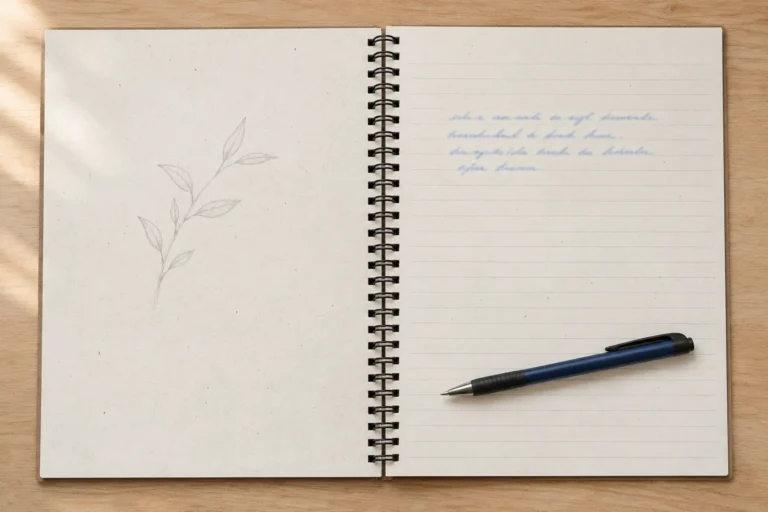
Hemp paper earns its place where someone will pick the sheet up and notice it. Letterhead. A menu. An invitation. A notebook you carry for a year. A drawing you want to keep.
What to look for on any label
- The post-consumer percentage. "Recycled" on its own can mean very little. Our article on post-consumer recycled fibre explains why.
- What the rest is made of. If a sheet is 30% recycled, 70% of it is something else.
- Whether it was bleached. See what chlorine-free and unbleached paper means.
Where to start
The comparison between hemp and tree fibre is laid out in full on the sustainability page. To try the paper itself, a Mini Ream is the smallest way in.
For the other comparison, read hemp paper vs tree paper. Ready to order? See where to buy hemp paper in Canada.
Made on hemp paper
Journals, stationery, and fine art paper made from 25% hemp and 75% post-consumer recycled fiber.