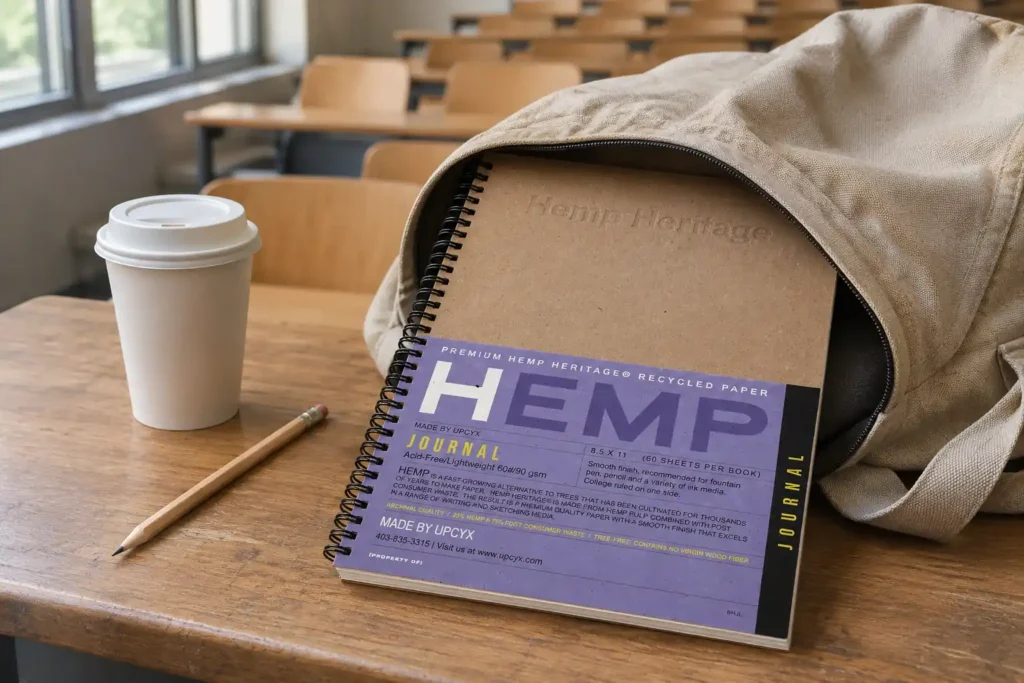
The best eco-friendly notebook for a student is one that lasts the whole term and gets used to the last page. A notebook that loses its cover by October and gets replaced is not a green choice, whatever the label says. Once a book passes that test, look at what the pages are made from.
Four things that make a notebook a good choice
1. It survives a backpack. A stiff cover and a binding that does not let go of pages. This matters more than anything printed on the packaging.
2. The pages are recycled, and the label says how much. Look for a post-consumer percentage. "Made with recycled content" on its own tells you very little.
3. Nothing was bleached. Bright white pages have usually been bleached. Off-white pages have not.
4. You can recycle it at the end. Paper and cardboard go in the bin. Plastic covers and laminated dividers do not.
What a student needs
- It opens flat. Lecture hall desks are small.
- Lines to write on. And ideally somewhere to draw a diagram that is not lined.
- A size that fits. Full letter size for class notes, something smaller for a bag.
- A cover you can write against. For the bus, the hallway floor and the back row.
How the Journal Book fits
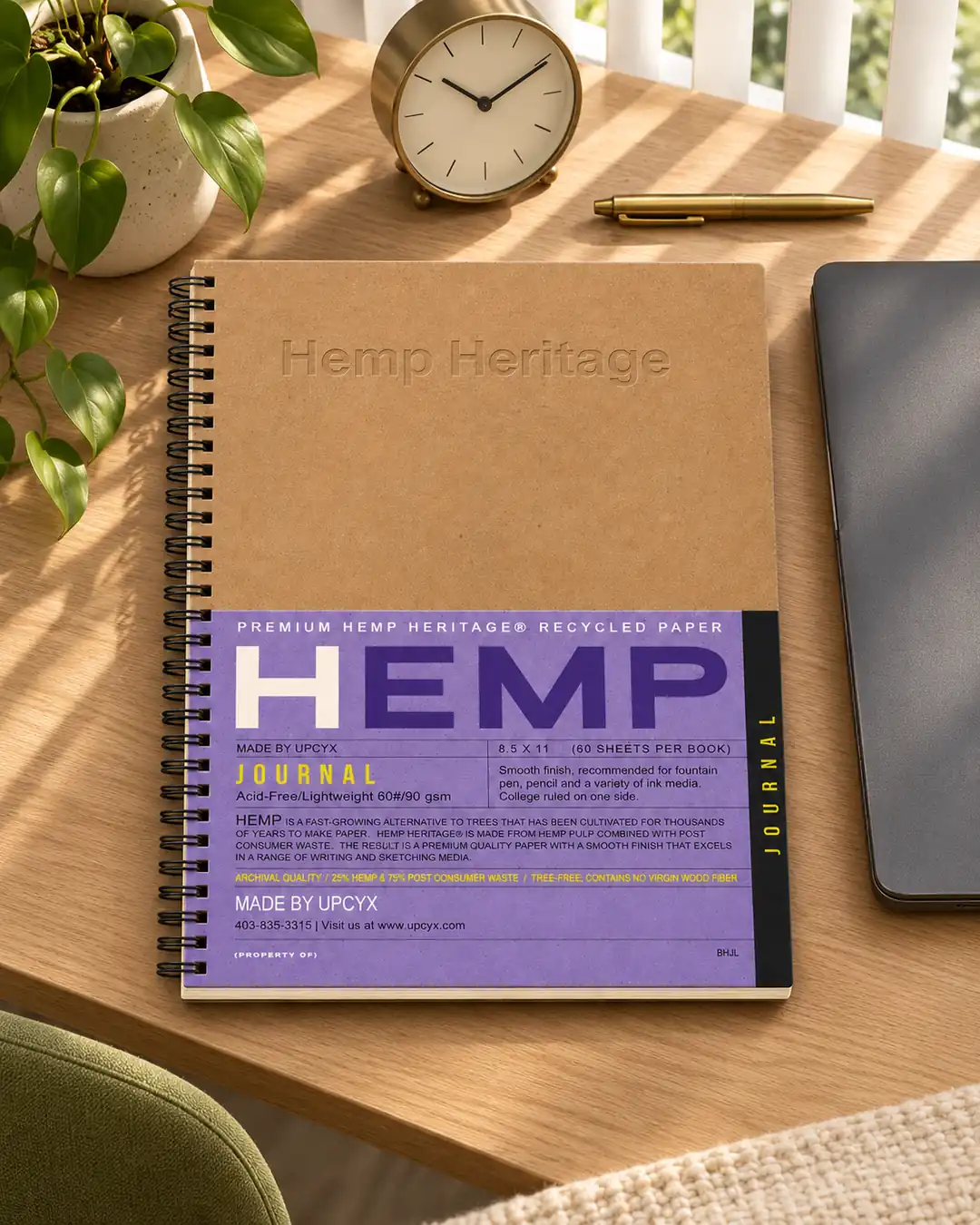
Journal Book
- Paper: 60 sheets of 60# text (90 gsm)
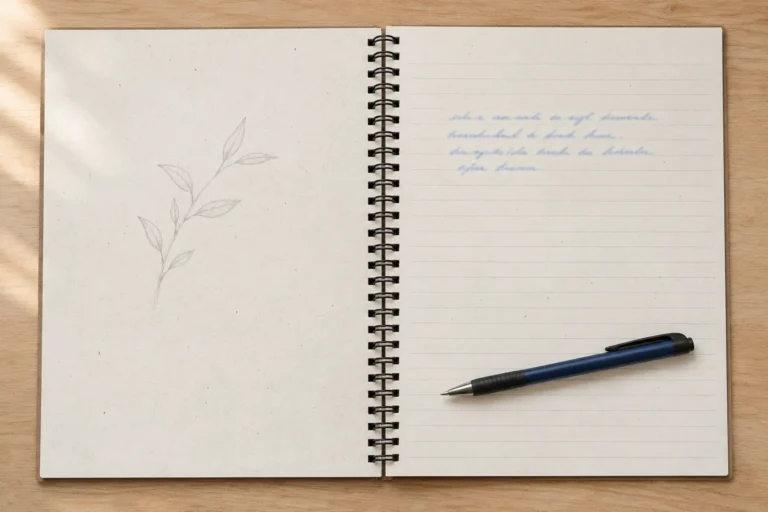
- Ruling: College ruled on the front of each page, blank on the back
- Sizes: Medium 7" x 7" and Large 8.5" x 11"
- Build: Extra-heavy debossed chipboard cover, black wire binding
Good for: writing on one side and sketching or doodling on the other. It also takes pastels, charcoal, pencil, and light washes.
Every sheet is college ruled on the front and blank on the back. For a student that turns out to be a useful layout. Notes go on the lined side. The graph, the molecule, the map or the vocabulary sketch goes on the blank side facing it. Science, math and language classes all suit it.
The pages are 25% hemp and 75% post-consumer recycled fibre, with no virgin wood pulp and nothing bleached or dyed. The paper is acid-free, so it does not carry the acid that turns old notebooks yellow.
The build is made for carrying. The wire binding lets the book fold back on itself, and the cover is extra-heavy chipboard.
Where it does not fit
- It has 60 sheets. That is 120 pages. A five-subject notebook has more. Think of the Journal Book as one book per course.
- Only one side of each sheet is ruled. If you fill both sides of every page with writing, half your pages will be unlined.
- It costs more than a back-to-school special. Hemp paper is a specialty paper made in small runs.
If the budget is tight, a plain notebook with a high post-consumer percentage is still a good choice. The rules above apply to any brand.
For art and design students
The right book depends on the medium.
- Pencil and charcoal: the Sketch Book, 60 blank sheets.
- Ink, gouache and mixed media: the Drawing Book, with 180 gsm paper.
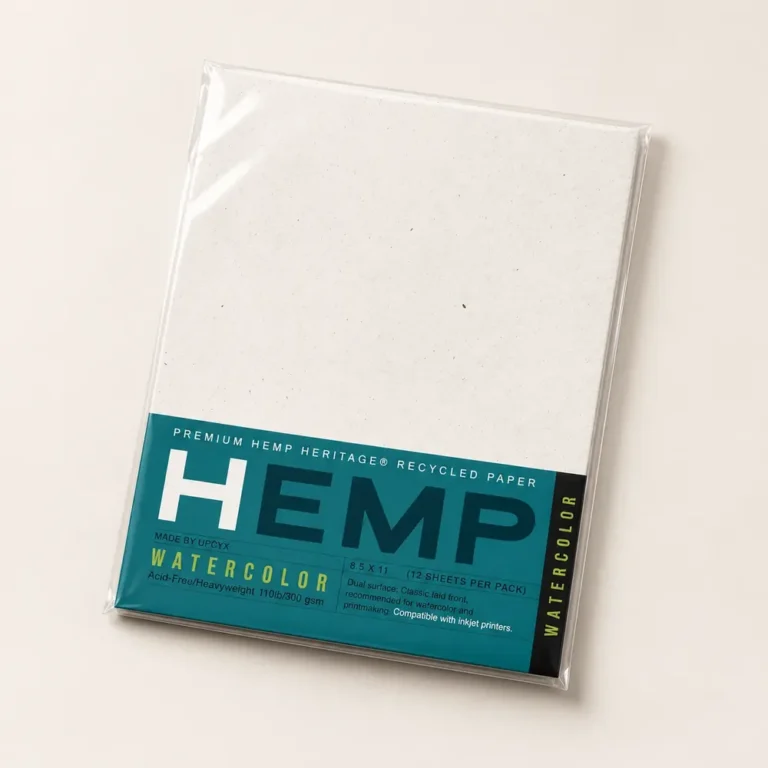
- Watercolour: the Watercolor Book, with 300 gsm paper.
Making any notebook greener
How you use a notebook counts for as much as what it is made of.
- Finish it. A half-used notebook in a drawer is wasted paper. Start next term in the same book.
- Use both sides.
- Take it apart at the end. Paper and chipboard go in the recycling, and the wire goes with scrap metal. We explain how in Can hemp paper be recycled or composted?
Buying for a class or a school?
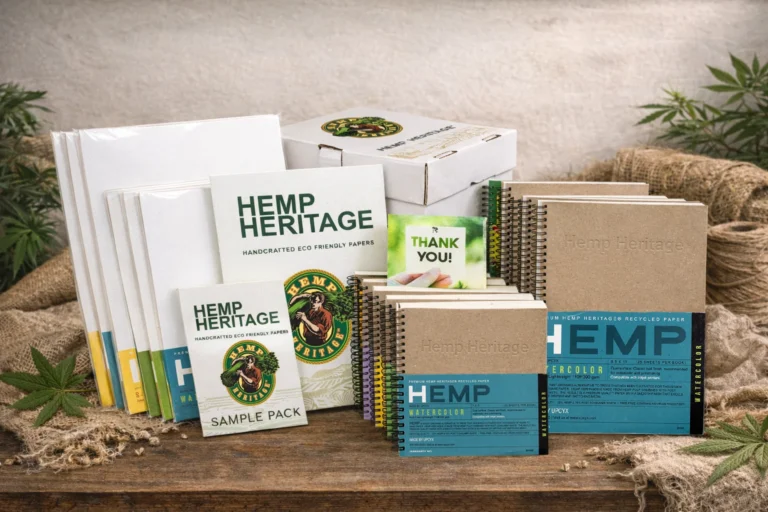
Schools, camps and programs can order through wholesale, and we make custom activity and sketch books as well. For one student, the Journals and Sketchbooks page has all six books.
Curious what makes the pages different? Read What is a hemp paper notebook?
Comparing materials? Read hemp notebooks vs bamboo, sugarcane and stone paper notebooks. For ideas on using one, see what you can use a hemp journal for.
Made on hemp paper
Journals, stationery, and fine art paper made from 25% hemp and 75% post-consumer recycled fiber.