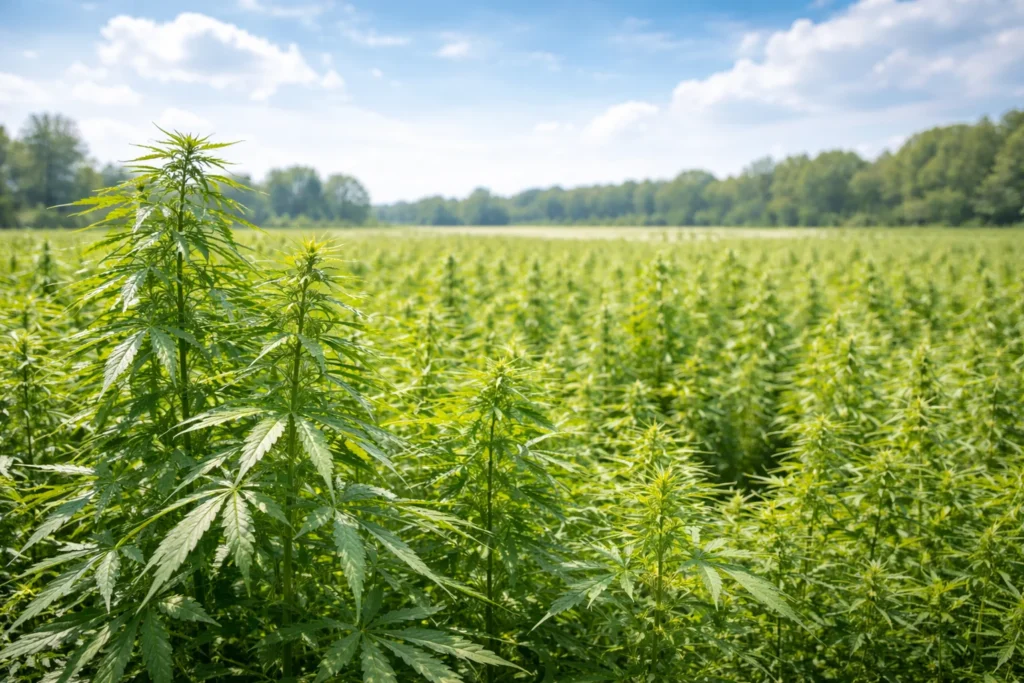
Hemp paper is made by separating the long fibres from the hemp stalk, turning them into pulp, mixing the pulp with water, and forming it into a sheet that is pressed and dried. The method is about two thousand years old. What has changed is the scale and the machinery.
The outline below is how hemp paper is made in general. What is particular to our own paper comes near the end.
1. Growing the hemp
Industrial hemp is sown thickly, so the plants grow tall and straight with long stalks. It is ready to harvest about four months after planting.
The stalk has two parts. The outer layer holds the long, strong bast fibres. The woody core is called the hurd. Bast fibre is what gives hemp paper its strength.
2. Separating the fibre
After harvest the stalks are left to break down a little, which loosens the fibre from the core. The two are then separated mechanically.
3. Making pulp
The fibre is cooked and beaten in water until it breaks down into pulp. Each fibre is roughened so that it will tangle with its neighbours later. This step decides a great deal about the finished sheet: how strong it is and how it feels.
4. Blending
Very little paper sold today is 100% hemp. Hemp pulp is usually blended with another pulp.
In our case the other pulp is recycled paper. Used paper is soaked and broken back down into fibre, then cleaned. Our blend is 25% hemp and 75% post-consumer recycled fibre, with no virgin wood pulp.
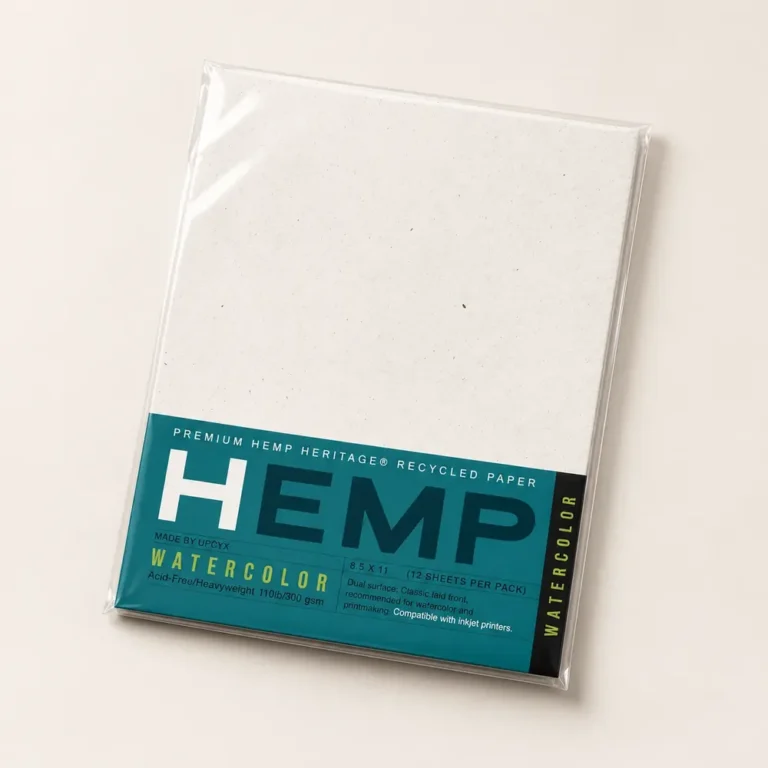
This is also the stage where most paper is bleached white and where dye is added. We skip both. Nothing in Hemp Heritage paper is bleached or dyed, which is why the sheet is a natural off-white and why you can see dark flecks of hemp fibre in it.
5. Forming the sheet
At this point the pulp is almost entirely water. It is spread across a moving screen of fine mesh. The water drains through and the fibres settle on top in a thin, wet mat. That mat is the sheet.
Surface patterns are made here too. A laid finish, with its fine parallel lines, is pressed into the paper while it is still wet.
6. Pressing and drying
Rollers squeeze out more water and press the fibres together. Heated cylinders dry what is left. As the sheet dries, the fibres lock to one another. No glue holds a sheet of paper together. It is fibre gripping fibre.
7. Cutting and finishing
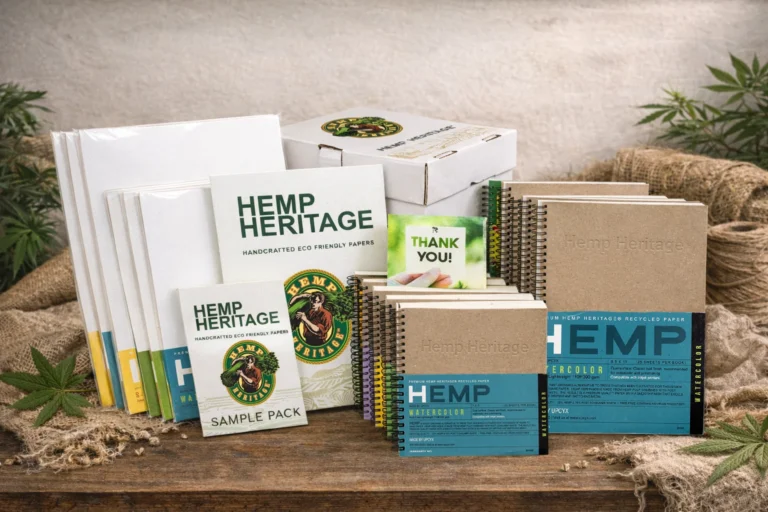
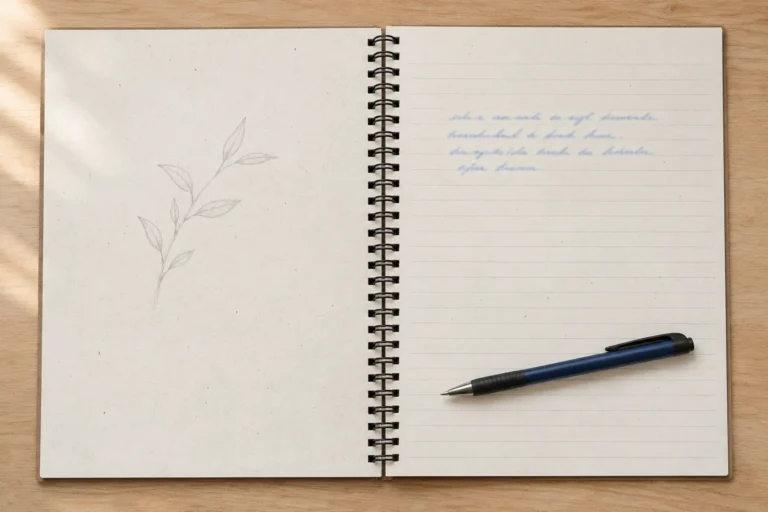
The dry paper is cut into large parent sheets. Ours are 23 x 35 in. From there it becomes the products you see: cut down to letter-size reams, bound into journals and sketchbooks, or made into envelopes and folders.
What is particular to Hemp Heritage
- The hemp is grown on North American farms.
- The paper is milled on hydroelectric power.
- No bleach and no dye are used.
- The paper is made and bound in North America, and orders ship from Calgary, Alberta.
Handmade and machine-made
The steps are the same either way. A hand papermaker dips a framed screen into a vat of pulp, lifts it out, and lets the water drain. A paper machine does the same thing on a moving screen, continuously.
Hemp Heritage started on the handmade side. The line was created in a studio that grew into one of the largest handmade paper companies in North America, where every sheet was pulled by hand. The paper we sell today is machine-made.
What you can see in the finished sheet
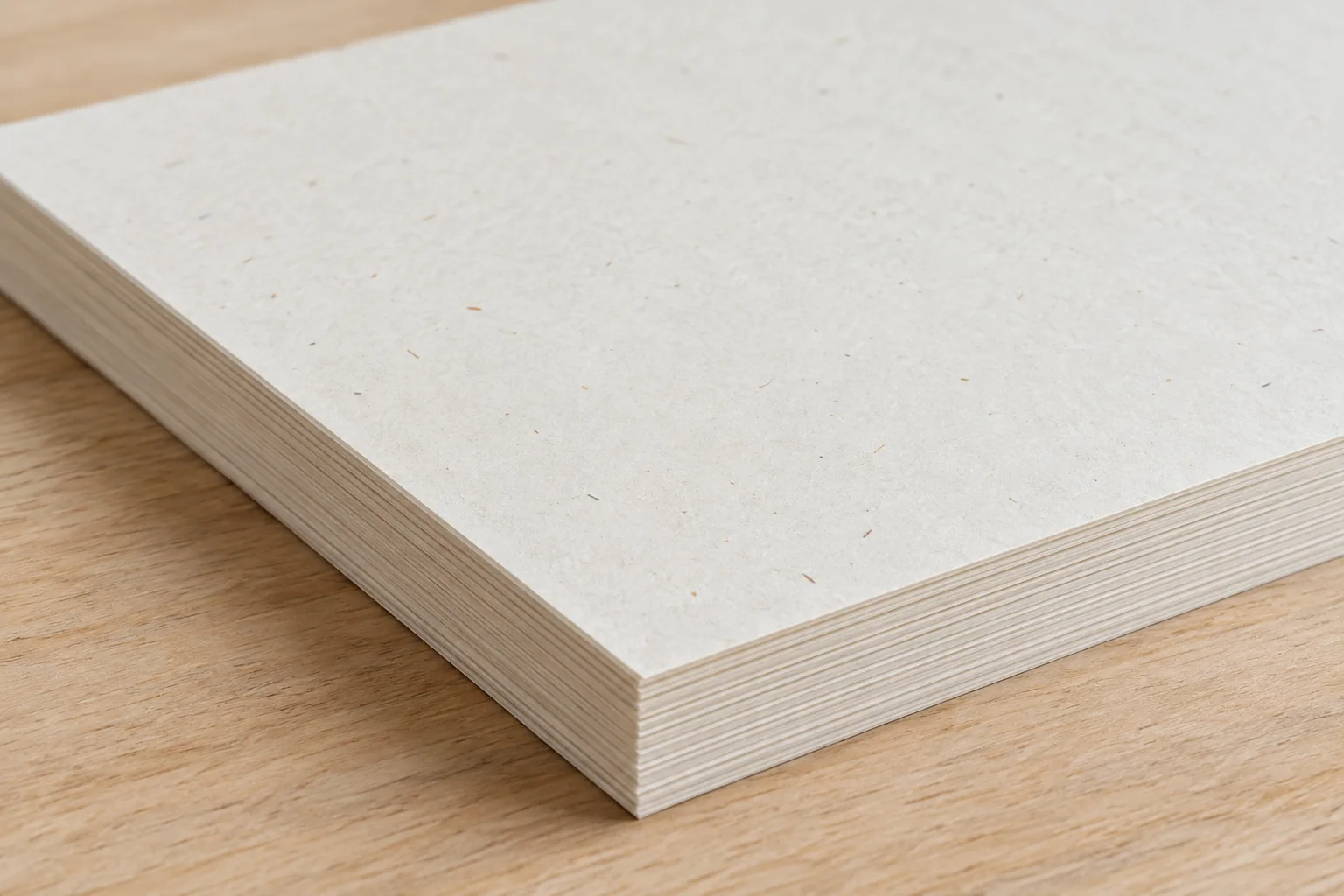
Pick up a sheet and the process is still visible.
- The colour is the colour of unbleached pulp.
- The flecks are hemp fibres.
- The tooth you feel comes from an uncoated surface.
- The small variation from batch to batch is what happens when nothing is tinted to match.
Keep reading
- What is post-consumer recycled fibre? covers the other 75% of the sheet.
- What does chlorine-free and unbleached paper mean? explains the step we leave out.
- The hemp paper page has the basics, and the shop has the result.
- Hemp paper vs tree paper compares the finished sheets.
Made on hemp paper
Journals, stationery, and fine art paper made from 25% hemp and 75% post-consumer recycled fiber.