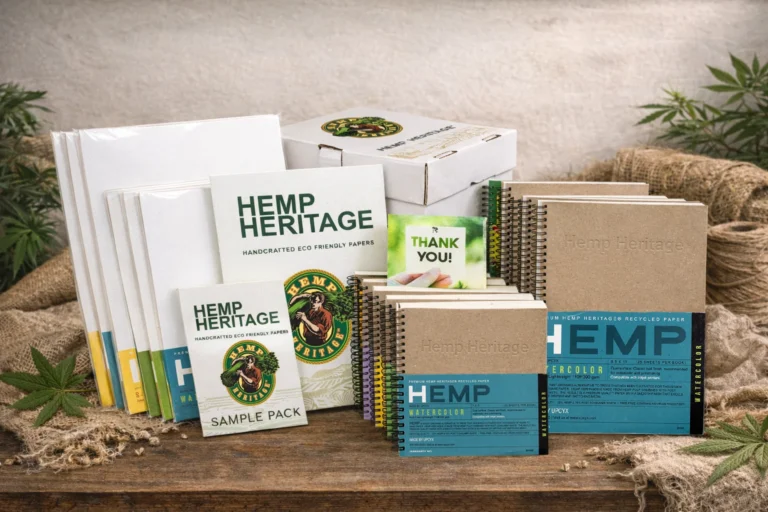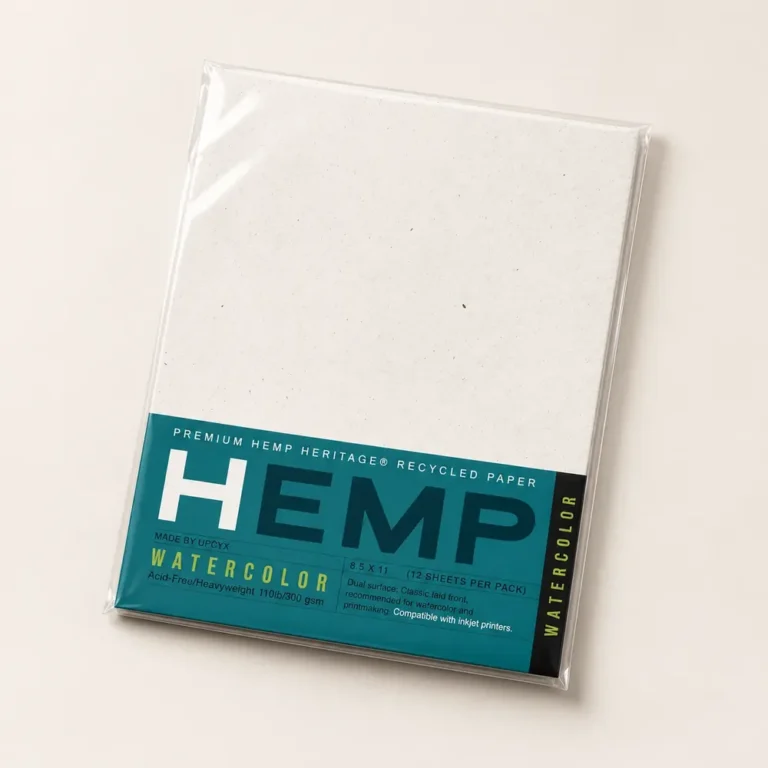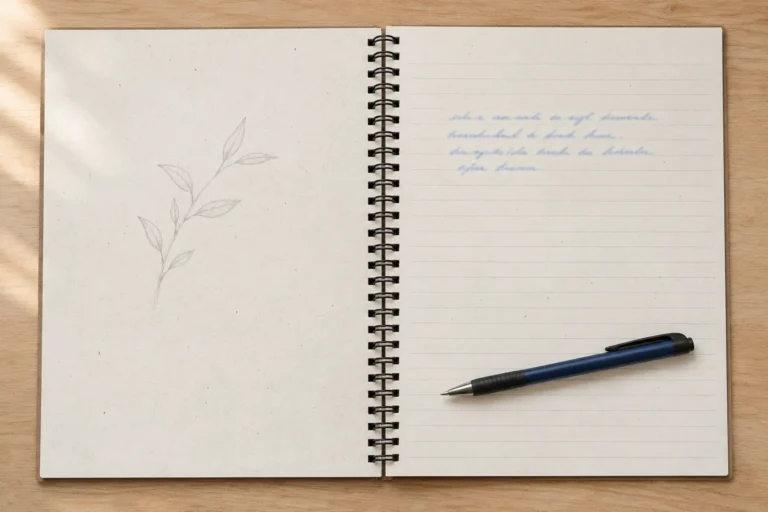
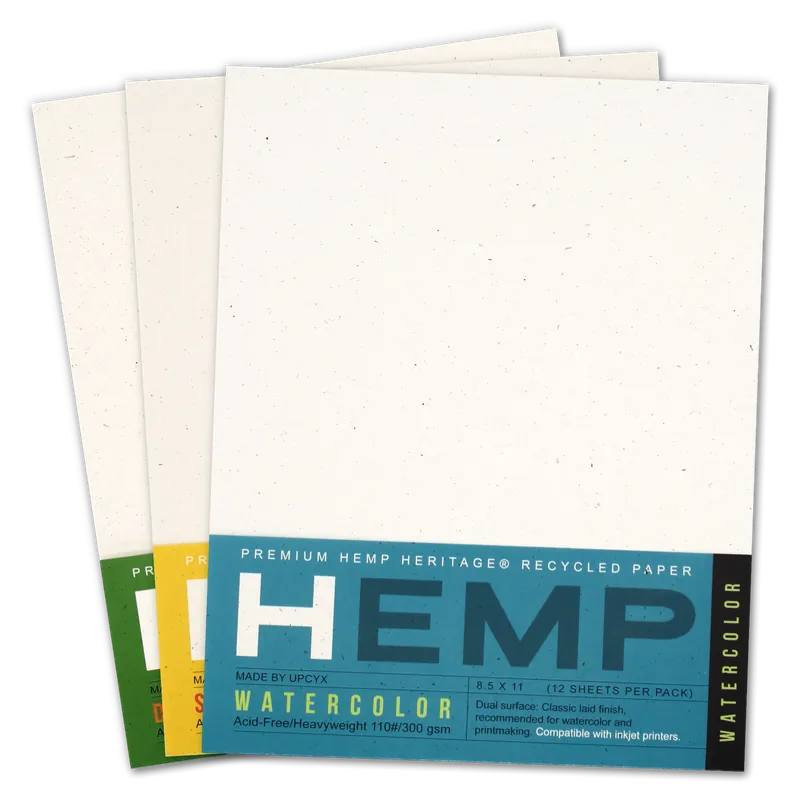
Unbleached paper has not been whitened at all, so it keeps the natural colour of its pulp. Chlorine-free paper was made without chlorine bleach, but it may still have been whitened another way. The two terms overlap without meaning the same thing. Hemp Heritage paper is both: nothing in it is bleached.
Why paper gets bleached in the first place
Paper pulp is not white. Wood pulp is brown, and recycled pulp is grey or off-white, depending on what went into it. People expect paper to be bright white, so most mills bleach the pulp to get there.
Bleaching is only about appearance. A sheet does not need to be white to be strong, to last, or to print well.
Why chlorine became a concern
For most of the last century, mills bleached pulp with chlorine gas. It worked, but it left chlorinated compounds in the mill's wastewater, dioxins among them. Those compounds do not break down easily. Once that was understood, the industry began moving to other methods.
The labels you see today describe how far a paper has moved.
The three labels
| Label | Stands for | What it means |
|---|---|---|
| ECF | Elemental chlorine free | Bleached with chlorine dioxide, not chlorine gas. Most white paper today |
| TCF | Totally chlorine free | New pulp bleached with oxygen, ozone or peroxide. No chlorine compounds at all |
| PCF | Processed chlorine free | Recycled paper that was re-made without any chlorine compounds |
One thing about PCF: with any recycled paper, the fibre may have been bleached in its first life, before it was ever recycled. Nobody can undo that. What the label tells you is whether chlorine was used this time around.
Where unbleached fits
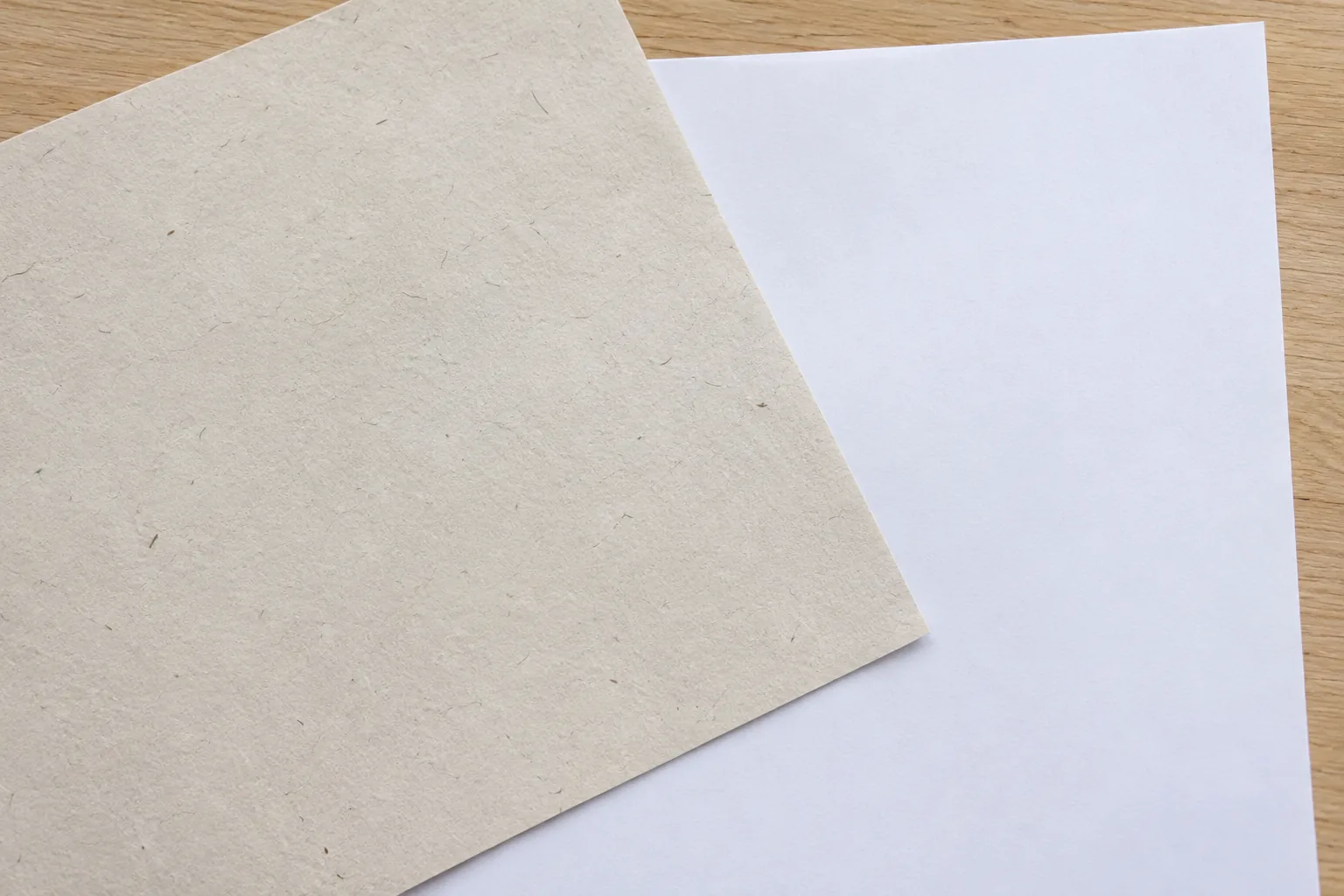
Unbleached goes a step further than all three. The pulp is not whitened by any method.
You can see it. An unbleached sheet is cream, off-white, grey or light brown, depending on the fibre. Small specks and fibres are often visible, because nothing has been done to hide them.
How to read a label
- "Chlorine-free" alone is vague. Ask which kind: ECF, TCF or PCF.
- Bright white and "eco" together deserve a second look. A sheet does not get that white on its own.
- "Unbleached" is the simplest claim to check. Look at the paper. If it is bright white, it has been bleached.
- "Natural" is not a standard. It describes a colour, not a process.
Does unbleached mean lower quality?
No. Bleaching is done for colour. Some of the finest art and book papers in the world are off-white.
What unbleached does change is how things look on the page.
- Printed colours come out a little warmer and softer.
- White in a design is the colour of the sheet.
- Black text often looks better. Many readers find a warm sheet easier on the eyes than a bright white one, which is one reason so many books are printed on cream paper.
What Hemp Heritage paper is
- No bleach and no dye. The off-white colour is the paper itself.
- Chlorine-free and acid-free. Mill tests show a pH of 8.2 to 8.4.
- 25% hemp and 75% post-consumer recycled fibre, with no virgin wood pulp.
- Visibly flecked. The dark specks are hemp fibre.
Because nothing is tinted to match, the colour varies slightly from one batch to the next. We think that is a fair trade for leaving the bleach out.
Related reading
- Is hemp paper acid-free, and how long does it last?
- What is post-consumer recycled fibre?
- How is hemp paper made? shows where bleaching would normally happen.
- Hemp paper vs tree paper: what is the difference?
To see an unbleached sheet for yourself, start with a Mini Ream, or read the figures on the sustainability page.
Made on hemp paper
Journals, stationery, and fine art paper made from 25% hemp and 75% post-consumer recycled fiber.